
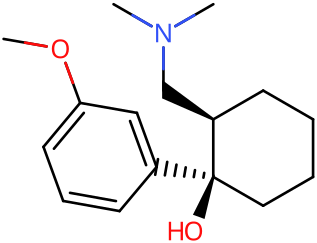
Tramadol Stats & Data
COc1cccc(c1)C1(O)CCCCC1CN(C)CTVYLLZQTGLZFBW-ZBFHGGJFSA-NPharmacology
DrugBankDescription
Tramadol is a centrally acting synthetic opioid analgesic and SNRI (serotonin/norepinephrine reuptake-inhibitor) that is structurally related to codeine and morphine. Due to its good tolerability profile and multimodal mechanism of action, tramadol is generally considered a lower-risk opioid option for the treatment of moderate to severe pain. It is considered a Step 2 option on the World Health Organization's pain ladder and has about 1/10th of the potency of morphine. Tramadol differs from other traditional opioid medications in that it doesn't just act as a μ-opioid agonist, but also affects monoamines by modulating the effects of neurotransmitters involved in the modulation of pain such as serotonin and norepinpehrine which activate descending pain inhibitory pathways. Tramadol's effects on serotonin and norepinephrine mimic the effects of other SNRI antidepressants such as duloxetine and venlafaxine. Tramadol exists as a racemic mixture consisting of two pharmacologically active enantiomers that both contribute to its analgesic property through different mechanisms and are also themselves metabolized into active metabolites: (+)-tramadol and its primary metabolite (+)-O-desmethyl-tramadol (M1) are agonists of the μ opioid receptor while (+)-tramadol inhibits serotonin reuptake and (-)-tramadol inhibits norepinephrine reuptake.
Mechanism of Action
Tramadol is a centrally acting μ-opioid receptor agonist and SNRI (serotonin/norepinephrine reuptake-inhibitor) that is structurally related to codeine and morphine. Tramadol binds weakly to κ- and δ-opioid receptors and to the μ-opioid receptor with 6000-fold less affinity than morphine. Tramadol exists as a racemic mixture consisting of two pharmacologically active enantiomers that both contribute to its analgesic property through different mechanisms: (+)-tramadol and its primary metabolite (+)-O-desmethyl-tramadol (M1) are agonists of the μ opioid receptor while (+)-tramadol inhibits serotonin reuptake and (-)-tramadol inhibits norepinephrine reuptake. These pathways are complementary and synergistic, improving tramadol's ability to modulate the perception of and response to pain. In animal models, M1 is up to 6 times more potent than tramadol in producing analgesia and 200 times more potent in μ-opioid binding. Tramadol has also been shown to affect a number of pain modulators including alpha2-adrenoreceptors, neurokinin 1 receptors, the voltage-gated sodium channel type II alpha subunit, transient receptor potential cation channel subfamily V member 1 (TRPV1 - also known as the capsaicin receptor), muscarinic receptors (M1 and M3), N-methyl-D-aspartate receptor (also known as the NMDA receptor or glutamate receptor), Adenosine A1 receptors, and nicotinic acetylcholine receptor.
Pharmacodynamics
Tramadol modulates the descending pain pathways within the central nervous system through the binding of parent and M1 metabolite to μ-opioid receptors and the weak inhibition of the reuptake of norepinephrine and serotonin. Apart from analgesia, tramadol may produce a constellation of symptoms (including dizziness, somnolence, nausea, constipation, sweating and pruritus) similar to that of other opioids. **Central Nervous System** In contrast to morphine, tramadol has not been shown to cause histamine release. At therapeutic doses, tramadol has no effect on heart rate, left-ventricular function or cardiac index. Orthostatic hypotension has been observed. Tramadol produces respiratory depression by direct action on brain stem respiratory centres. The respiratory depression involves both a reduction in the responsiveness of the brain stem centres to increases in CO2 tension and to electrical stimulation. Tramadol depresses the cough reflex by a direct effect on the cough centre in the medulla. Antitussive effects may occur with doses lower than those usually required for analgesia. Tramadol causes miosis, even in total darkness. Pinpoint pupils are a sign of opioid overdose but are not pathognomonic (e.g., pontine lesions of hemorrhagic or ischemic origin may produce similar findings). Marked mydriasis rather than miosis may be seen with hypoxia in the setting of oxycodone overdose.
Metabolism
Tramadol undergoes extensive first-pass metabolism in the liver by N- and O- demethylation and conjugation. From the extensive metabolism, there have been identified at least 23 metabolites. There are two main metabolic pathways: the O-demethylation of tramadol to produce O-desmethyl-tramadol (M1) catalyzed by CYP2D6 and the N-demethylation to N-desmethyl-tramadol (M2) catalyzed by CYP3A4 and CYP2B6. The wide variability in the pharmacokinetic properties between patients can partly be ascribed to polymorphisms within the gene for CYP2D6 that determine its enzymatic activity. CYP2D6\*1 is considered the wild-type allele associated with normal enzyme activity and the "extensive metabolizer" phenotype; 90-95% of Caucasians are considered "extensive metabolizers" (with normal CYP2D6 function) while the remaining 5-10% are considered "poor metabolizers" with reduced or non-functioning enzyme. CYP2D6 alleles associated with non-functioning enzyme include *3, *4, *5, and *6 while alleles associated with reduced activity include *9, *10, *17, and *41. Poor metabolizers have reduced activity of the CYP2D6 enzyme and therefore less production of tramadol metabolites M1 and M2, which ultimately results in a reduced analgesic effect as tramadol interacts with the μ-opioid receptor primarily via M1.
Absorption
**Oral Administration** Tramadol is administered as a racemate, with both the - and + forms of both tramadol and the M1 metabolite detected in circulation. Following administration, racemic tramadol is rapidly and almost completely absorbed, with a bioavailability of 75%. This difference in absorption and bioavailability can be attributed to the 20-30% first-pass metabolism. Peak plasma concentrations of tramadol and the primary metabolite M1 occur at two and three hours, respectively. Following a single oral dose of 100mg of tramadol, the Cmax was found to be approximately 300μg/L with a Tmax of 1.6-1.9 hours, while metabolite M1 was found to have a Cmax of 55μg/L with a Tmax of 3 hours. Steady-state plasma concentrations of both tramadol and M1 are achieved within two days of dosing. There is no evidence of self-induction. Following multiple oral doses, Cmax is 16% higher and AUC is 36% higher than after a single dose, demonstrating a potential role of saturable first-pass hepatic metabolism in increasing bioavailability. **Intramuscular Administration** Tramadol is rapidly and almost completely absorbed following intramuscular administration. Following injection of 50mg of tramadol, Cmax of 166μg/L was found with a Tmax of 0.75 hours. **Rectal Administration** Following rectal administration with suppositories containing 100mg of tramadol, Cmax of 294μg/L was found with a Tmax of 3.3 hours.
Indication
Tramadol is approved for the management of moderate to severe pain in adults. Tramadol is also used off-label in the treatment of premature ejaculation.
Half-life
Tramadol reported a half-life of 5-6 hours while the M1 metabolite presents a half-life of 8 hours.
Protein Binding
About 20% of the administered dose is found to bind to plasma proteins. Protein binding appears to be independent of concentrations up to 10μg/mL. Saturation only occurs at concentrations outside of the clinical range.
Elimination
Tramadol is eliminated primarily through metabolism by the liver and the metabolites are excreted primarily by the kidneys, accounting for 90% of the excretion while the remaining 10% is excreted through feces. Approximately 30% of the dose is excreted in the urine as unchanged drug, whereas 60% of the dose is excreted as metabolites. The mean terminal plasma elimination half-lives of racemic tramadol and racemic M1 are 6.3 ± 1.4 and 7.4 ± 1.4 hours, respectively. The plasma elimination half-life of racemic tramadol increased from approximately six hours to seven hours upon multiple dosing.
Volume of Distribution
The volume of distribution of tramadol is reported to be in the range of 2.6-2.9 L/kg. Tramadol has high tissue affinity; the total volume of distribution after oral administration was 306L and 203L after parenteral administration. Tramadol crosses the blood-brain barrier with peak brain concentrations occurring 10 minutes following oral administration. It also crosses the placental barrier with umbilical concentrations being found to be ~80% of maternal concentrations.
Clearance
In clinical trials, the clearance rate of tramadol ranged from 3.73 ml/min/kg in renal impairment patients to 8.50 ml/min/kg in healthy adults.
Receptor Profile
Receptor Actions
Receptor Binding
Measured Affinities
Guide to PHARMACOLOGYMeasured binding and functional data for tramadol, curated by the IUPHAR/BPS Guide to PHARMACOLOGY. Each row cites the paper it came from. Lower concentrations mean tighter binding — a value in the sub-nanomolar range indicates a very potent interaction.
| Target | Action | Measure | Value | Concentration | Species | Source |
|---|---|---|---|---|---|---|
| δ receptor OPRD1 | Agonist | pKi | 8.03 | 9.33 nM | Human | PMID 19027293 |
| κ receptor OPRK1 | Agonist | pKi | 7.85 | 14.13 nM | Human | PMID 19282177 |
| μ receptor OPRM1 | Agonist | pKi | 5.8 | 1,585 nM | Human | PMID 19282177 |
Reading this. pKi, pEC50 and pIC50 are negative log molar values, so a higher number means a tighter interaction; the concentration column converts them for you. Values from non-human species are laboratory measurements and do not translate directly to human effect. Receptor affinity is not a dose — it describes what a molecule binds, not how much of it is safe to take.
Receptor data from the IUPHAR/BPS Guide to PHARMACOLOGY (v2026.2), licensed CC BY-SA 4.0. Matched to this substance by InChIKey.
History & Culture
Tramadol was developed in 1962 by researchers at Grünenthal, a German pharmaceutical company. Despite its early synthesis, the compound did not receive regulatory approval in Germany until 1977, when it entered the market under the trade name Tramal. Following its introduction, tramadol quickly established itself as a leading analgesic medication in Germany and subsequently gained approval in over 100 countries worldwide, including the United Kingdom, United States, China, and Canada. An unusual episode in tramadol's history occurred when researchers initially believed they had discovered the compound occurring naturally in the roots of the African pin cushion tree (Nauclea latifolia). This finding generated considerable interest as it would have represented a rare example of a synthetic pharmaceutical later found in nature. However, subsequent investigation revealed that the tramadol detected in the plant roots had actually originated from cattle that had been treated with the medication; the drug had been excreted and subsequently absorbed into the root system through contaminated soil. By 2021, tramadol had become one of the most widely prescribed medications in the United States, ranking as the 35th most commonly dispensed drug with over 17 million prescriptions issued that year.
Subjective Effects
Physical
The cognitive effects of tramadol can be broken down into several components which progressively intensify proportional to dosage. The general head space of codeine is described by many as one of intense euphoria, relaxation, anxiety suppression and pain relief.
- Pain relief: This component is subjectively different from other anaesthetics as it does not necessarily remove the pain entirely whilst still remaining equal in terms of its effectiveness. Instead of directly suppressing pain these substances simply dull the perceived sensation and cover it up with feelings of physical and emotional pleasure.
- Physical euphoria: This particular substance can be considered as less intense in its physical euphoria when compared with that of morphine or diacetylmorphine (heroin). The sensation itself can be described as extreme feelings of hyper intense physical comfort, snugglyness, warmth, love and blissful euphoria.
- Itchiness: It presents greater amounts of itchiness due to higher amounts of histamine release.
- Stimulation: This compound is considerably more stimulating than that of codiene and diacetylmorphine due to its effects as a serotonin reuptake inhibitor.
- Constipation
- Cough suppression
- Difficulty urinating
- Nausea
- Sedation
- Pupil constriction
- Salivation
Cognitive
The physical effects of tramadol can be broken down into three components which progressively intensify proportional to dosage.
- Cognitive euphoria: This particular substance can be considered as less intense in its cognitive euphoria when compared with that of morphine or diacetylmorphine (heroin). The sensation itself can be described as powerful and overwhelming feeling of emotional bliss, contentment, love and happiness.
- Anxiety suppression
- Compulsive redosing
Forked from Subjective Effect Documentation by Josie Kins, August 2015. Via dose.wiki (CC0).
Tramadol has a low toxicity relative to dose. As with all opioids, long-term effects can vary but can include diminished libido, apathy and memory loss. It is also potentially lethal when mixed with depressants like alcohol or benzodiazepines and generally has a wider range of substances which it is dangerous to combine with in comparison to other opioids. It should not be taken during benzodiazepine withdrawals as this can potentially cause seizures. It is strongly recommended that one use harm reduction practices when using this drug.
LD50
LD50: 300-350 mg/kg (Oral, Rat) (A2833)
Carcinogenicity
No indication of carcinogenicity to humans (not listed by IARC).
Addiction & dependence
As with other opioids, the chronic use of tramadol can be considered moderately addictive with a high potential for abuse and is capable of causing psychological dependence among certain users. When addiction has developed, cravings and withdrawal symptoms may occur if a person suddenly stops their usage. Tolerance to many of the effects of tramadol develops with prolonged and repeated use.
Effect Profile
Curated + 297 ReportsStrong euphoria, pain relief, and sedation with strong itching/nausea
Empirical Duration
Erowid ReportsMedian times after the dose that Erowid reports state. A curve is drawn only when reports state all four points (onset, peak begins, comedown begins, back to baseline) and the medians fall in that order. No point is estimated from another.
No curve: fewer than 5 reports state the return to baseline, and no point is estimated from another.
Tolerance & Pharmacokinetics
drugs.wikiNo tolerance chart. Our decay curves for opioids were estimates, and a curve can make tolerance look longer-lasting than it is, which is the dangerous direction.
Opioid tolerance drops fast when you stop, and even a few days off can be enough, so a dose that used to be normal can now stop your breathing. Overdose deaths rise sharply after prison, detox or leaving treatment, and tolerance also falls during a hospital stay. After any break, start with a much smaller amount, try a test dose first, don't use alone, and keep naloxone within reach. Alcohol, benzodiazepines, gabapentinoids and other sedatives make an opioid overdose much more likely.
Sources: FRANK: heroin · National Harm Reduction Coalition · WHO: opioid overdose · Merrall et al. 2010 · Binswanger et al. 2007 · Strang et al. 2003 · FDA 2019: gabapentinoids and breathing
Cross-Tolerances
Demographics
Gender Distribution
Age Distribution
Reports Over Time
Effect Analysis
Erowid + BluelightEffects aggregated from 297 experience reports (247 single-substance Erowid + 50 Bluelight)
Effect Sentiment Distribution
Confidence Distribution
Each bar is the share of reports mentioning the effect; its whisker, and the band on the rows below, is the 95% interval: where the share could plausibly be with other reports of the same kind.
Positive Effects 48
Adverse Effects 44
Show 24 more adverse effects
Show 13 neutral or unclassified mentions
Also reported in combinations. In the 123 Tramadol reports where another drug was taken too, 25 (20.3%) mention hospital, emergency services or an overdose, 18 (14.6%) a seizure and 2 (1.6%) psychosis. In the 247 single-substance reports: 10.9%, 14.6% and 0.4%. These are not in the figures above: they cannot be put down to Tramadol alone, and a mention is not always something that happened to the writer.
Dose-Response Correlation
How effect frequency changes across dose levels. Whiskers, and the numbers' hover text, give each figure's 95% interval.
Not drawn, too few reports (a dose tier needs 20): Oral Light (n=14). Why 20?
View data table
| Effect | Common (n=81) | Heavy (n=31) |
|---|---|---|
| Euphoria | 46.9% (95% interval 36 to 58 percent) | 29.0% (95% interval 16 to 47 percent) |
| Nausea | 32.1% (95% interval 23 to 43 percent) | 16.1% (95% interval 7 to 33 percent) |
| Seizure | 12.3% (95% interval 7 to 21 percent) | 29.0% (95% interval 16 to 47 percent) |
| Empathy | 28.4% (95% interval 20 to 39 percent) | 16.1% (95% interval 7 to 33 percent) |
| Sedation | 25.9% (95% interval 18 to 36 percent) | 16.1% (95% interval 7 to 33 percent) |
| Stimulation | 18.5% (95% interval 12 to 28 percent) | 25.8% (95% interval 14 to 43 percent) |
| Hospital | 7.4% (95% interval 3 to 15 percent) | 25.8% (95% interval 14 to 43 percent) |
| Anxiety | 23.5% (95% interval 16 to 34 percent) | 19.4% (95% interval 9 to 36 percent) |
| Pain Relief | 11.1% (95% interval 6 to 20 percent) | 16.1% (95% interval 7 to 33 percent) |
| Music Enhancement | 16.0% (95% interval 10 to 26 percent) | 9.7% (95% interval 3 to 25 percent) |
| Body High | 13.6% (95% interval 8 to 23 percent) | — |
| Auditory Effects | 6.2% (95% interval 3 to 14 percent) | 12.9% (95% interval 5 to 29 percent) |
| Confusion | 12.3% (95% interval 7 to 21 percent) | 6.5% (95% interval 2 to 21 percent) |
| Headache | 11.1% (95% interval 6 to 20 percent) | 9.7% (95% interval 3 to 25 percent) |
| Tactile Enhancement | 8.6% (95% interval 4 to 17 percent) | — |
Subjective Effect Ontology
Experience ReportsStructured effect tags extracted from 453 Erowid & Bluelight experience reports using a controlled vocabulary of 220+ canonical effects across 15 domains.
Emotional
Gastrointestinal
Motor
Dose–Effect Mapping
Experience ReportsHow reported effects shift across dose tiers, based on 247 single-substance experience reports. The shaded band on each bar is its 95% interval. An arrow (↑ ↓) marks a change between the lowest and highest tier that count an effect only when the gap is bigger than chance would explain; ~ means no clear change. How changes are called
Not drawn, too few reports (a dose tier needs 20): Oral Light (n=14). Why 20?
Limited tier coverage — most reports fall within the Common / Heavy range. Effects at other dose levels may not be represented.
| Effect | Common (n=81) | Heavy (n=31) | Change with dose |
|---|---|---|---|
| euphoria | (no clear change: −18 points from Common to Heavy, 95% interval −35 to +3) | ||
| nausea | (no clear change: −16 points from Common to Heavy, 95% interval −30 to +3) | ||
| seizure | (+17 points from Common to Heavy, 95% interval +1 to +35) | ||
| empathy | (no clear change: −12 points from Common to Heavy, 95% interval −26 to +6) | ||
| sedation | (no clear change: −10 points from Common to Heavy, 95% interval −24 to +9) | ||
| stimulation | (no clear change: +7 points from Common to Heavy, 95% interval −8 to +26) | ||
| hospital | (+18 points from Common to Heavy, 95% interval +4 to +36) | ||
| anxiety | (no clear change: −4 points from Common to Heavy, 95% interval −19 to +15) | ||
| pain relief | (no clear change: +5 points from Common to Heavy, 95% interval −8 to +22) | ||
| music enhancement | (no clear change: −6 points from Common to Heavy, 95% interval −18 to +10) | ||
| body high | — | counted in the Common tier only | |
| auditory effects | (no clear change: +7 points from Common to Heavy, 95% interval −4 to +23) | ||
| confusion | (no clear change: −6 points from Common to Heavy, 95% interval −16 to +9) | ||
| headache | (no clear change: −1 points from Common to Heavy, 95% interval −12 to +15) | ||
| tactile enhancement | — | counted in the Common tier only | |
| focus enhancement | — | counted in the Common tier only | |
| jaw clenching | — | counted in the Common tier only | |
| motor impairment | (no clear change: −1 points from Common to Heavy, 95% interval −10 to +14) | ||
| sweating | — | counted in the Common tier only | |
| memory suppression | (no clear change: +2 points from Common to Heavy, 95% interval −7 to +16) |
Showing top 20 of 28 effects
Risk Escalation
Sentiment AnalysisAverage frequency of positive vs adverse effects across dose tiers. A tier's average is the mean share of the effects counted in that tier, not a share of reports, and its range is a deliberately wide 95% interval. A tier with more reports also counts rarer effects, which pulls its average down, so compare single effects in the breakdown rather than these averages. There, the shaded band on each bar is its 95% interval, and Change is marked up or down only when the gap between two tiers is bigger than chance would explain. How changes are called
Not drawn, too few reports (a dose tier needs 20): Light (n=14). Why 20?
View effect breakdown
Adverse Effects
| Effect | Common (n=81) | Heavy (n=31) | Change |
|---|---|---|---|
| Nausea | no clear change (no clear change: −16 points from Common to Heavy, 95% interval −30 to +3) | ||
| Seizure | +17 pts (+17 points from Common to Heavy, 95% interval +1 to +35) | ||
| Anxiety | no clear change (no clear change: −4 points from Common to Heavy, 95% interval −19 to +15) | ||
| Confusion | no clear change (no clear change: −6 points from Common to Heavy, 95% interval −16 to +9) | ||
| Headache | no clear change (no clear change: −1 points from Common to Heavy, 95% interval −12 to +15) | ||
| Jaw Clenching | — | — | |
| Motor Impairment | no clear change (no clear change: −1 points from Common to Heavy, 95% interval −10 to +14) | ||
| Sweating | — | — | |
| Memory Suppression | no clear change (no clear change: +2 points from Common to Heavy, 95% interval −7 to +16) | ||
| Muscle Tension | — | — | |
| Increased Heart Rate | — | — | |
| Pupil Dilation | — | — |
Positive Effects
| Effect | Common (n=81) | Heavy (n=31) | Change |
|---|---|---|---|
| Euphoria | no clear change (no clear change: −18 points from Common to Heavy, 95% interval −35 to +3) | ||
| Empathy | no clear change (no clear change: −12 points from Common to Heavy, 95% interval −26 to +6) | ||
| Stimulation | no clear change (no clear change: +7 points from Common to Heavy, 95% interval −8 to +26) | ||
| Pain Relief | no clear change (no clear change: +5 points from Common to Heavy, 95% interval −8 to +22) | ||
| Music Enhancement | no clear change (no clear change: −6 points from Common to Heavy, 95% interval −18 to +10) | ||
| Body High | — | — | |
| Tactile Enhancement | — | — | |
| Focus Enhancement | — | — | |
| Color Enhancement | — | — |
Dosage Distribution
Dose distribution from experience reports, one dose per report (the first listed). Doses above Q3 + 3×IQR, far above what people typically take, are left out of the median and range and listed under each route: most are real heavy doses or overdoses, not mistakes.
4 reports gave a dose above the typical range (1,000–2,600 mg), so they are not in the figures above. 3 of them mention hospital, emergency services or an overdose. Listing a dose here does not mean it is safe.
1 dose more than 50 times the median may be a typing or unit error and is not in the figures either: check the report.
Real-World Dose Distribution
ErowidFrom 400 of 414 recorded dose entries: those that state a weight (mg, g or µg), in routes with at least five of them. Values above Q3 + 3×IQR, far above what people typically take, are left out; they can include real heavy doses and overdoses, not only mistakes.
Oral (n=372)
Insufflated (n=9)
Common Combinations
Most co-occurring substances, as a share of all 370 reports filed under Tramadol; whiskers are 95% intervals
Form / Preparation
Most common forms and preparations, as a share of the 249 reports that give one; whiskers are 95% intervals
Body-Weight Dosing
Dose per kg of body weight, one dose per report (the first listed), from reports giving a weight of 30–250 kg. Doses above Q3 + 3×IQR, far above what people typically take, are left out of the median and range and listed under each route.
8 reports gave a dose above the typical range (10.02–52.104 mg/kg), so they are not in the figures above. 5 of them mention hospital, emergency services or an overdose. Listing a dose here does not mean it is safe.
1 dose more than 50 times the median may be a typing or unit error and is not in the figures either: check the report.
Show the reports
- 52.104 mg/kg · mentions hospital, emergency services or an overdose
- 15.756 mg/kg · mentions hospital, emergency services or an overdose
- 14.706 mg/kg · mentions hospital, emergency services or an overdose
- 12.882 mg/kg
- 11.029 mg/kg
- 11.024 mg/kg · another drug taken too · mentions hospital, emergency services or an overdose
- 10.11 mg/kg · mentions hospital, emergency services or an overdose
- 10.02 mg/kg
Possibly a typing or unit error:
- 551.268 mg/kg · another drug taken too
Redose Patterns
Redosing behavior across 317 reports
Opioid Equivalence (MME)
NIH HEAL 2024 & CDC 2022Tramadol 50 mg oral ≈ 10 mg Morphine oral
Legal Status
| Country | Status | Notes |
|---|---|---|
| Argentina | Technically prescription-only | Officially requires prescription but practically available over-the-counter at many pharmacies in 50mg and 100mg tablets as well as IV ampules. |
| Australia | Schedule 4 | Classified as a Prescription-Only Medicine since 2001 under the Poisons Standard. Requires a valid prescription to obtain legally. |
| Austria | Prescription-only | Legal for medical use under the Arzneimittelgesetz (AMG). Possession or sale without a valid prescription is illegal under the Suchtmittelgesetz (SMG). |
| Belarus | Prescription-only (Category B) | Classified under Category B pharmaceutical regulations requiring a valid prescription for legal possession. |
| Bolivia | Available without prescription | Available in 50mg tablets and IV ampules over-the-counter at pharmacies without prescription. |
| Brazil | List A2 (controlled) | Classified under List A2 as a narcotic substance by ANVISA (Agência Nacional de Vigilância Sanitária). Requires prescription and is subject to controlled substance regulations. |
| Cambodia | Available without prescription | Available from pharmacies without prescription. Typical cost approximately $1-2 USD for 10 capsules as of 2010. |
| Canada | Prescription-only (unscheduled) | Not listed in the Controlled Drugs and Substances Act but requires prescription under Schedule F of the Food and Drugs Regulations. Most pharmacies will not dispense without a prescription. A 2007 proposal to add tramadol to Schedule I was not enacted. |
| Colombia | Available without prescription | Can be purchased over-the-counter at drug stores along with other opioid-containing medications. |
| Costa Rica | Variable enforcement | Available at some pharmacies without prescription though many require it. Sold in 50mg capsules and extended-release tablets up to 300mg. |
| Egypt | Controlled (prescription-only) | Listed as controlled since October 2002 and requires prescription. Despite national control, tramadol remained widely abused, with nearly 70% of people treated at addiction facilities using the drug as of 2015. |
| Ethiopia | Available without prescription | Regularly sold over-the-counter at fair-sized pharmacies, particularly in Addis Ababa. Official regulatory status unclear but practical availability is unrestricted. |
| Germany | Prescription medicine | Regulated as a prescription medication according to Anlage 1 AMVV (Arzneimittelverschreibungsverordnung). Not classified as a narcotic under the BtMG but requires medical authorization. |
| India | Controlled substance | Classified as Schedule H (prescription-only) and brought under the Narcotic Drugs and Psychotropic Substances Act in April 2018 due to abuse concerns and links to criminal organizations. |
| Indonesia | Available without prescription | Reportedly available over-the-counter from pharmacies without prescription, though pricing may vary for tourists versus locals. |
| Iran | Prescription-only | Was widely available over-the-counter until late 2009 when the Ministry of Health prohibited non-prescription sales. Now manufactured domestically and available through pharmacies with prescription only. |
| Ireland | Prescription-only | Regulated under S.I. No. 540/2003. Legal to possess and use only with a valid prescription from a licensed medical practitioner. |
| Japan | Controlled import | Requires a simplified license to import for personal use, with a maximum 60-day supply permitted. Subject to customs inspection and possible review for reclassification. |
| Kuwait | Available without prescription | Available over-the-counter in 50mg and 100mg capsule forms as of 2003. |
| Lithuania | Controlled narcotic | Controlled as a narcotic substance grouped with other opiates. Requires a specialized prescription form to acquire legally, rather than a standard prescription. |
| Malaysia | Not controlled | Not listed as a First Schedule drug under the Dangerous Drugs Act 1952. May still require prescription under pharmaceutical regulations. |
| Mexico | Prescription-only | Officially marked for prescription-sale only though enforcement varies by pharmacy. Possession without proper prescription can result in detention, arrest, or demands for bribes. |
| Norway | Prescription-only (not scheduled) | Requires a prescription but is not classified as a scheduled narcotic substance. Available through pharmacies with medical authorization. |
| Philippines | Available without prescription | Available for purchase at major pharmacy chains without prescription in urban areas. |
| Poland | Prescription-only (not scheduled) | Not scheduled as a narcotic substance but classified as a prescription-only medication. Legal possession requires valid medical prescription. |
| Portugal | Prescription medication | Officially requires prescription though enforcement varies. Personal drug possession has been decriminalized since 2001, applying to small quantities for personal use. |
| Romania | Prescription-only | Requires valid medical prescription for legal possession and use. Available through licensed pharmacies. |
| Rwanda | Available without prescription | Widely available over-the-counter. Sold as Tramasec brand (tramadol HCl 50mg capsules) manufactured in India. |
| Singapore | Controlled (poison legislation) | Not available over-the-counter. Controlled under poison legislation rather than drug control laws. Requires prescription for legal access. |
| South Africa | Schedule 5 | Classified as a Schedule 5 controlled substance for prescribed medical use only. Sale and possession without prescription is decriminalized and treated as a misdemeanor rather than a criminal offense. |
| Spain | Prescription medication | Launched in 1992 and was one of the only opioids not requiring special prescription forms. Usage increased significantly from 2.1 to 570.6 defined daily doses per million people per day between 1992 and 1998. |
| Sri Lanka | Prescription-only | Difficult to obtain without proper prescription. Available through strict government-run medical stores with drugs imported from India. |
| Sweden | Schedule III (controlled) | Classified as a controlled substance since December 2007, in the same category as codeine and dextropropoxyphene. Unlike other scheduled opioids, a normal prescription can be used rather than special prescription forms. |
| Switzerland | Abgabekategorie A | Listed as a Category A pharmaceutical requiring a medical prescription. Available through licensed pharmacies with valid prescription only. |
| Thailand | Available without prescription | As of May 2014, tramadol in 50mg and 100mg oral forms is available from pharmacies without prescription. Sold under the brand name Tramagesic. |
| Turkey | Green prescription | Classified as a 'green prescription' medication indicating controlled status. Illegal to sell or possess without a valid medical prescription. |
| United Arab Emirates | Strictly controlled | Highly regulated with severe penalties. Only specialist surgeons can prescribe a maximum 4-week supply, with government review of each prescription. Possession without prescription can result in 4 years imprisonment. Tramadol is the strongest opioid available as morphine and codeine are banned. |
| United Kingdom | Class C (Schedule 3) | Classified as a Class C drug under the Misuse of Drugs Act as of June 10, 2014. Previously available as a prescription-only medicine without controlled substance status. Annual tramadol-related deaths declined following scheduling. |
| United States | Schedule IV | Federally scheduled as of August 18, 2014 under the Controlled Substances Act. Prior to federal scheduling, several states independently controlled tramadol including Arkansas, Illinois, Kentucky, Massachusetts, New York, Oklahoma, and Wyoming. Possession without prescription is illegal. |
Harm Reduction
drugs.wiki• Tramadol lowers seizure threshold; risk rises with higher single doses (>250–300 mg), rapid redosing, co-use of stimulants or other seizure‑threshold–lowering medicines (e.g., bupropion, many antidepressants), history of seizures, or electrolyte abnormalities. Seizures have occurred even within the therapeutic range in susceptible people. • Time-to-peak is slow (3–4 h). Redosing early to “chase” effects substantially increases overdose and seizure risk; wait through the peak before deciding about any redose. • Tramadol is a μ‑opioid agonist and a serotonin/norepinephrine reuptake inhibitor; combining with serotonergic agents (SSRIs/SNRIs/TCAs/triptans/MDMA/DXM/MAOIs) can precipitate serotonin syndrome (agitation, sweating, tremor/clonus, hyperreflexia, hyperthermia). Seek urgent care if symptoms appear. • Genetic differences matter: CYP2D6 ultrarapid metabolizers produce more M1 (O‑desmethyltramadol) and face greater risk of opioid toxicity/respiratory depression at standard doses; poor metabolizers may get weaker analgesia but relatively more SNRI‑type adverse effects. • CYP2D6 inhibitors (fluoxetine, paroxetine, bupropion, quinidine) raise parent‑drug levels and lower M1, shifting effects toward SNRI toxicity and seizures; monitor closely or avoid. Strong CYP3A4 inhibitors/inducers can also alter exposure; carbamazepine induction can blunt effects and is not recommended with tramadol due to seizure concerns. • Avoid combining with CNS depressants (alcohol, benzodiazepines/Z‑drugs, GHB) and/or other opioids—these combinations are strongly associated with fatal respiratory depression and require naloxone availability if use occurs. • Do not inject or snort tablets/capsules: non‑sterile excipients can cause abscesses, vascular injury, and emboli; bypassing first‑pass metabolism unpredictably alters the tramadol:M1 ratio and does not reliably enhance effects. • Taper after sustained daily use to reduce withdrawal; discontinuation may include both opioid (GI upset, aches, insomnia) and SNRI‑like symptoms (irritability, anxiety, electric‑shock sensations). • Max typical IR adult total daily dose is 400 mg; many adverse events and seizures are reported above this. Extended‑release products have different limits—follow product‑specific guidance. • Not recommended in children <12 years; contraindicated for post‑tonsillectomy/adenoidectomy analgesia in <18 years. Breastfeeding is discouraged due to risk of high M1 exposure in infants of CYP2D6 ultrarapid metabolizers. • Avoid driving or hazardous tasks until you’ve tested individual response on a separate day; sedation and delayed peak can impair performance hours after dosing. • Heat, dehydration, and long dance/party settings increase risks from serotonergic toxicity; hydrate, cool, and seek help early if overheating or confusion occurs.
References
Data Sources
Additional references
- TripSit Wiki — Tramadol (dose, duration, seizure cautions)
- TripSit — Drug combinations (opioids/benzos/GHB, tramadol+MAOI/SSRI risks, stimulants & seizures)
- Erowid — Tramadol Dosage
- Erowid — Tramadol Effects & Duration
- Erowid — Tramadol Health Concerns (SS/Seizures)
- NCBI MedGen — Tramadol response (CYP2D6 phenotype; UM/PM guidance)
- NCBI Book (Medical Genetics Summaries) — Tramadol Therapy and CYP2D6 Genotype (Dean 2015)
- MedGen excerpt — CYP2D6/3A4 inhibitor/inducer interactions with tramadol
- Bluelight — Tramadol info (half-life; injection warnings; practical cautions)
- Bluelight — O-DSMT Megathread (M1 half-life ~9 h; pharmacology notes)