
Morphine Stats & Data
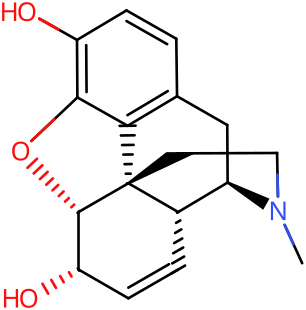
CN1CCC23C4C1CC5=C2C(=C(C=C5)O)OC3C(C=C4)OBQJCRHHNABKAKU-KBQPJGBKSA-NPharmacology
DrugBankDescription
Morphine, the main alkaloid of opium, was first obtained from poppy seeds in 1805. It is a potent analgesic, though its use is limited due to tolerance, withdrawal, and the risk of abuse. Morphine is still routinely used today, though there are a number of semi-synthetic opioids of varying strength such as codeine, fentanyl, methadone, hydrocodone, hydromorphone, meperidine, and oxycodone. Morphine was granted FDA approval in 1941.
Mechanism of Action
Morphine-6-glucuronide is responsible for approximately 85% of the response observed by morphine administration. Morphine and its metabolites act as agonists of the mu and kappa opioid receptors. The mu-opioid receptor is integral to morphine's effects on the ventral tegmental area of the brain. Morphine's activation of the reward pathway is mediated by agonism of the delta-opioid receptor in the nucleus accumbens, while modification of the respiratory system and addiction disorder are mediated by agonism of the mu-opioid receptor.
Pharmacodynamics
Morphine binding to opioid receptors blocks transmission of nociceptive signals, signals pain-modulating neurons in the spinal cord, and inhibits primary afferent nociceptors to the dorsal horn sensory projection cells. Morphine has a time to onset of 6-30 minutes. Excess consumption of morphine and other opioids can lead to changes in synaptic neuroplasticity, including changes in neuron density, changes at postsynaptic sites, and changes at dendritic terminals. Intravenous morphine's analgesic effect is sex dependent. The EC50 in men is 76ng/mL and in women is 22ng/mL. Morphine-6-glucuronide is 22 times less potent than morphine in eliciting pupil constriction.
Metabolism
Morphine is 90% metabolized by glucuronidation by UGT2B7 and sulfation at positions 3 and 6. Morphine can also be metabolized to codeine, normorphine, and morphine ethereal sulfate.
Absorption
Morphine is absorbed in the alkaline environments of the upper intestine and rectal mucosa. The bioavailability of morphine is 80-100%. There is significant first-pass metabolism, therefore oral doses are 6 times larger than parenteral doses to achieve the same effect. Morphine reaches steady-state concentrations after 24-48 hours. Parenteral morphine has a Tmax of 15 minutes and oral morphine has a Tmax of 90 minutes, with a Cmax of 283nmol/L. The AUC of morphine is 225-290nmol\*h/L.
Indication
Morphine is used for the management of chronic, moderate to severe pain. Opiods, including morphine, are effective for the short term management of pain. Patients taking opioids long term may need to be monitored for the development of physical dependence, addiction disorder, and drug abuse.
Protein Binding
Morphine is 35% protein bound, the metabolite morphine-3-glucuronide is 10% protein bound, and morphine-6-glucuronide is 15% protein bound.
Elimination
70-80% of an administered dose is excreted within 48 hours. Morphine is predominantly eliminated in the urine with 2-10% of a dose recovered as the unchanged parent drug. 7-10% of a dose of morphine is eliminated in the feces.
Volume of Distribution
The volume of distribution of morphine is 5.31L/kg. Morphine-6-glucuronide has a volume of distribution of 3.61L/kg.
Clearance
The apparent clearance of intravenous or subcutaneous morphine is 1600 mL/min.
Receptor Profile
Receptor Actions
Receptor Binding
Measured Affinities
Guide to PHARMACOLOGYMeasured binding and functional data for morphine, curated by the IUPHAR/BPS Guide to PHARMACOLOGY. Each row cites the paper it came from. Lower concentrations mean tighter binding — a value in the sub-nanomolar range indicates a very potent interaction.
| Target | Action | Measure | Value | Concentration | Species | Source |
|---|---|---|---|---|---|---|
| μ receptor OPRM1 | Full agonist | pKi | 9 | 1 nM | Human | — |
| μ receptor Oprm1 | Partial agonist | pKi | 7.9 | 12.59 nM | Rat | PMID 8114680 |
| κ receptor OPRK1 | Partial agonist | pKi | 7.3 | 50.12 nM | Human | PMID 9686407 |
| δ receptor OPRD1 | Full agonist | pKi | 6.9 | 125.89 nM | Human | PMID 9686407 |
| κ receptor Oprk1 | Partial agonist | pKi | — | — | Rat | — |
Reading this. pKi, pEC50 and pIC50 are negative log molar values, so a higher number means a tighter interaction; the concentration column converts them for you. Values from non-human species are laboratory measurements and do not translate directly to human effect. Receptor affinity is not a dose — it describes what a molecule binds, not how much of it is safe to take.
Receptor data from the IUPHAR/BPS Guide to PHARMACOLOGY (v2026.2), licensed CC BY-SA 4.0. Matched to this substance by InChIKey.
History & Culture
The history of morphine is deeply intertwined with humanity's long relationship with the opium poppy. The earliest documented references to opium-based preparations can be traced to the 3rd century BC, when the Greek philosopher Theophrastus recorded their existence. Some scholars suggest that Sumerian clay tablets containing medical prescriptions may reference opium-derived remedies as far back as 2100 BC. Throughout antiquity and the medieval period, opium preparations remained valued in medical practice. Byzantine alchemists reportedly developed an opium-based elixir, though its specific formulation was lost following the Ottoman conquest of Constantinople. Around 1522, the Swiss physician Paracelsus described an opium preparation he named laudanum—derived from the Latin "laudāre," meaning "to praise"—which he extolled as a powerful painkiller while cautioning that it should be used sparingly.
1804–1817
Morphine was first isolated from opium in December 1804 by German pharmacist Friedrich Sertürner in Paderborn, representing the first successful isolation of a medicinal alkaloid from any plant. Sertürner initially named the substance "morphium" after Morpheus, the Greek god of dreams, in reference to its pronounced sleep-inducing properties. In 1817, Sertürner published accounts of experiments in which he administered morphine to himself, three young boys, three dogs, and a mouse—with all four human subjects nearly dying from the experience. The isolated compound proved approximately six times more potent than crude opium. Although Sertürner initially theorized that the lower doses required might reduce its addictive potential, he himself developed dependence on the substance. He later issued a stark warning about its dangers, writing that he felt obligated to draw attention to the "terrible effects of this new substance" so that "calamity may be averted."
1817–1855
Sertürner and Company first marketed morphine to the general public in 1817, promoting it both as a pain treatment and, paradoxically, as a remedy for opium and alcohol addiction. Large-scale commercial manufacturing began in Darmstadt, Germany, in 1827 when the pharmacy that would eventually become the pharmaceutical company Merck commenced production—with morphine sales becoming a substantial driver of the firm's early growth. The substance's first documented use as a poison occurred in 1822, when French physician Edme Castaing was convicted of murdering a patient with morphine. The development of the hypodermic syringe between 1853 and 1855 significantly expanded morphine's clinical applications and accelerated its adoption in medical practice. A popular but likely apocryphal story from this period claims that Scottish physician Alexander Wood killed his wife Rebecca through an experimental morphine injection, though historical records indicate she actually survived her husband by a decade.
1855–1914
Morphine's extensive deployment as a battlefield analgesic during the American Civil War allegedly resulted in over 400,000 veterans developing what became known as "soldier's disease"—chronic morphine addiction. This claim remains historically contested, with some scholars suggesting the epidemic was exaggerated or fabricated; notably, the phrase "soldier's disease" does not appear in documented sources until 1915, decades after the war's conclusion. Morphine remained the most commonly misused narcotic analgesic worldwide until the development of heroin. Diacetylmorphine was first synthesized from morphine in 1874 and was subsequently introduced commercially by Bayer in 1898. The new derivative proved approximately 1.5 to 2 times more potent than morphine by weight. Prior to the synthesis of heroin and related compounds—including dihydromorphine around 1900, the dihydromorphinone class in the 1920s, and oxycodone in 1916—no synthetic alternatives existed that could match the analgesic efficacy of these opium-derived substances. Recognition of morphine's addiction liability eventually prompted regulatory action. In 1914, the United States passed the Harrison Narcotics Tax Act, making morphine a controlled substance and establishing criminal penalties for possession without a prescription.
1925–2003
The structural formula of morphine was determined by British chemist Robert Robinson by 1925, laying the groundwork for subsequent synthetic chemistry. In 1925, Hungarian pharmacologist János Kabay developed a method for extracting morphine from poppy straw—the dried pods and stems of the plant—rather than relying solely on the traditional labor-intensive process of collecting latex from scored unripe seed pods. This innovation, publicly announced in 1930, eventually became the predominant industrial extraction method. The first total synthesis of morphine from basic chemical feedstocks was achieved in 1952 by Marshall D. Gates, Jr. at the University of Rochester. Since then, at least three distinct synthetic routes using starting materials derived from coal tar and petroleum distillates have been patented, though the overwhelming majority of commercial morphine continues to be extracted from the opium poppy. A significant discovery occurred in 2003 when researchers confirmed that morphine is produced endogenously within the human body. This finding resolved three decades of speculation prompted by the identification of the μ3-opioid receptor in human tissue, which appeared to respond specifically to morphine.
2005–2013
Modern morphine production relies primarily on poppy straw extraction rather than traditional latex collection. As of 2013, global production reached approximately 523 tons annually, with roughly 45 tons used directly for pain management—representing a 400% increase in direct medical use over the preceding two decades. The majority of this therapeutic use occurs in developed nations. Approximately 70% of manufactured morphine serves as a precursor for synthesizing other opioid medications, including hydromorphone, oxymorphone, and heroin. The global distribution of morphine reflects stark international disparities. According to 2005 estimates from the International Narcotics Control Board, six countries—Australia, Canada, France, Germany, the United Kingdom, and the United States—consumed 79% of the world's medical morphine supply. Meanwhile, less affluent nations representing 80% of the global population consumed only approximately 6% of available morphine stocks.
Subjective Effects
Physical
- Euphoria: The physical euphoria experienced on this substance is extremely intense when compared to other opioids such as codeine or tramadol. The sensation itself can be described as feelings of intense physical comfort, warmth, love and blissful euphoria.
- Pain relief
- Respiratory depression
- Itchiness
- Constipation
- Cough suppression
- Difficulty urinating
- Nausea
- Sedation
- Pupil constriction
- Decreased libido
Cognitive
- Euphoria: The cognitive euphoria experienced on this substance is extremely intense when compared to other opioids such as codeine or tramadol. The sensation itself can be described as powerful and overwhelming feelings of emotional bliss, contentment, and happiness.
- Anxiety suppression
- Compulsive redosing
Sensory
- Internal hallucinations: One may experience a state of semi-consciousness and hypnagogia during heavy dosage nodding which results in dream-like states and up to level 3 imagery. This is often accompanied by ill-defined geometry.
Forked from Subjective Effect Documentation work by Josie Kins, August 2016. Via dose.wiki (CC0).
Like most opioids, unadulterated morphine does not cause many long-term complications other than dependence and constipation. Outside of the extremely powerful addiction and physical dependence, the harmful or toxic aspects of morphine usage are exclusively associated with not taking appropriate precautions in regards to its administration, overdosing and using impure products. Heavy dosages of morphine can result in respiratory depression, leading onto fatal or dangerous levels of anoxia (oxygen deprivation). This occurs because the breathing reflex is suppressed by agonism of µ-opioid receptors proportional to the dosage consumed. Morphine can also cause nausea and vomiting; a significant number of deaths attributed to opioid overdose are caused by aspiration of vomit by an unconscious victim.
LD50
LD50: 461 mg/kg (oral, rat)LD50: 600 mg/kg (oral, mouse)
Carcinogenicity
No indication of carcinogenicity to humans (not listed by IARC).
Addiction & dependence
As with other opiate-based painkillers, the chronic use of morphine can be considered extremely addictive and is capable of causing both physical and psychological dependence. When physical dependence has developed, withdrawal symptoms may occur if a person suddenly stops their usage. Tolerance to many of the effects of morphine develops with prolonged use, including therapeutic effects.
Effect Profile
Curated + 88 ReportsStrong pain relief with strong itching/nausea, moderate euphoria and sedation
User Experiences
Tolerance & Pharmacokinetics
drugs.wikiNo tolerance chart. Our decay curves for opioids were estimates, and a curve can make tolerance look longer-lasting than it is, which is the dangerous direction.
Opioid tolerance drops fast when you stop, and even a few days off can be enough, so a dose that used to be normal can now stop your breathing. Overdose deaths rise sharply after prison, detox or leaving treatment, and tolerance also falls during a hospital stay. After any break, start with a much smaller amount, try a test dose first, don't use alone, and keep naloxone within reach. Alcohol, benzodiazepines, gabapentinoids and other sedatives make an opioid overdose much more likely.
Sources: FRANK: heroin · National Harm Reduction Coalition · WHO: opioid overdose · Merrall et al. 2010 · Binswanger et al. 2007 · Strang et al. 2003 · FDA 2019: gabapentinoids and breathing
Cross-Tolerances
Demographics
Gender Distribution
Age Distribution
Reports Over Time
Effect Analysis
Erowid + BluelightEffects aggregated from 88 experience reports (78 single-substance Erowid + 10 Bluelight)
Effect Sentiment Distribution
Confidence Distribution
Each bar is the share of reports mentioning the effect; its whisker, and the band on the rows below, is the 95% interval: where the share could plausibly be with other reports of the same kind.
Rows resting on fewer than 20 reports show a count (“3 of 7”) instead of a bar. Why 20?
Positive Effects 27
Adverse Effects 19
Show 19 neutral or unclassified mentions
Also reported in combinations. In the 59 Morphine reports where another drug was taken too, 13 (22.0%) mention hospital, emergency services or an overdose, 1 (1.7%) a seizure and 0 (0.0%) psychosis. In the 78 single-substance reports: 23.1%, 0.0% and 1.3%. These are not in the figures above: they cannot be put down to Morphine alone, and a mention is not always something that happened to the writer.
Dose-Response Correlation
How effect frequency changes across dose levels. Whiskers, and the numbers' hover text, give each figure's 95% interval.
View data table
| Effect | Heavy (n=32) |
|---|---|
| Nausea | 40.6% (95% interval 26 to 58 percent) |
| Sedation | 40.6% (95% interval 26 to 58 percent) |
| Euphoria | 34.4% (95% interval 20 to 52 percent) |
| Body High | 28.1% (95% interval 16 to 45 percent) |
| Hospital | 21.9% (95% interval 11 to 39 percent) |
| Empathy | 18.8% (95% interval 9 to 35 percent) |
| Stimulation | 15.6% (95% interval 7 to 32 percent) |
| Dissociation | 12.5% (95% interval 5 to 28 percent) |
| Closed-Eye Visuals | 12.5% (95% interval 5 to 28 percent) |
| Headache | 12.5% (95% interval 5 to 28 percent) |
| Anxiety | 12.5% (95% interval 5 to 28 percent) |
| Focus Enhancement | 12.5% (95% interval 5 to 28 percent) |
| Pupil Dilation | 9.4% (95% interval 3 to 24 percent) |
| Music Enhancement | 9.4% (95% interval 3 to 24 percent) |
| Increased Heart Rate | 9.4% (95% interval 3 to 24 percent) |
Dose–Effect Mapping
Experience ReportsHow reported effects shift across dose tiers, based on 78 single-substance experience reports. The shaded band on each bar is its 95% interval. An arrow (↑ ↓) marks a change between the lowest and highest tier that count an effect only when the gap is bigger than chance would explain; ~ means no clear change. How changes are called
Limited tier coverage — most reports fall within the Heavy range. Effects at other dose levels may not be represented.
| Effect | Heavy (n=32) | Change with dose |
|---|---|---|
| nausea | ||
| sedation | ||
| euphoria | ||
| body high | ||
| hospital | ||
| empathy | ||
| stimulation | ||
| dissociation | ||
| closed-eye visuals | ||
| headache | ||
| anxiety | ||
| focus enhancement | ||
| pupil dilation | ||
| music enhancement | ||
| increased heart rate | ||
| confusion | ||
| auditory effects | ||
| sweating | ||
| visual distortions | ||
| memory suppression |
Showing top 20 of 21 effects
Dosage Distribution
Dose distribution from experience reports, one dose per report (the first listed). Doses above Q3 + 3×IQR, far above what people typically take, are left out of the median and range and listed under each route: most are real heavy doses or overdoses, not mistakes.
Insufflated
Oral
1 report gave a dose above the typical range (400 mg), so it is not in the figures above. It mentions hospital, emergency services or an overdose. Listing a dose here does not mean it is safe.
Show the report
- 400 mg · mentions hospital, emergency services or an overdose
Real-World Dose Distribution
ErowidFrom 156 of 177 recorded dose entries: those that state a weight (mg, g or µg), in routes with at least five of them. Values above Q3 + 3×IQR, far above what people typically take, are left out; they can include real heavy doses and overdoses, not only mistakes.
Oral (n=81)
Insufflated (n=51)
Intravenous (n=17)
Smoked (n=5)
Common Combinations
Most co-occurring substances, as a share of all 137 reports filed under Morphine; whiskers are 95% intervals
Form / Preparation
Most common forms and preparations, as a share of the 96 reports that give one; whiskers are 95% intervals
Body-Weight Dosing
Dose per kg of body weight, one dose per report (the first listed), from reports giving a weight of 30–250 kg. Doses above Q3 + 3×IQR, far above what people typically take, are left out of the median and range and listed under each route.
Insufflated
Oral
1 report gave a dose above the typical range (5.188 mg/kg), so it is not in the figures above. It mentions hospital, emergency services or an overdose. Listing a dose here does not mean it is safe.
Show the report
- 5.188 mg/kg · mentions hospital, emergency services or an overdose
Intravenous
Redose Patterns
Redosing behavior across 108 reports
Opioid Equivalence (MME)
NIH HEAL 2024 & CDC 2022Morphine 10 mg oral = 10 mg MME (reference standard)
Legal Status
| Country | Status | Notes |
|---|---|---|
| United Kingdom | Prescription Medicine | Available for medical use in hospital settings. Utilized for acute and chronic pain management under medical supervision. |
| United States | FDA Approved (Controlled Narcotic) | Received FDA approval in 1941 for medical use. Classified as a narcotic and designated as a high-risk opioid by regulatory authorities. Multiple pharmaceutical formulations have active patents for extended-release and abuse-deterrent preparations. |
Harm Reduction
drugs.wikiAvoid combining morphine with benzodiazepines, alcohol, or other depressants—this markedly increases the risk of fatal respiratory depression; this polydrug pattern is implicated in a large proportion of opioid‑related deaths. Carry naloxone and ensure others know how and when to use it; longer naloxone monitoring or infusion may be needed when active metabolites accumulate (e.g., renal impairment). In renal impairment, morphine’s active metabolite morphine‑6‑glucuronide (M6G) accumulates and can markedly prolong and intensify effects; consider lower doses, wider spacing, or alternative opioids with less renal elimination. Do not crush or chew prolonged‑release morphine (dose dumping) and never inject tamper‑resistant or oral formulations; insoluble excipients raise the risk of emboli and infections. If injecting occurs despite risks, strict harm‑reduction includes single‑use sterile syringes and sterile water, skin prep with alcohol, and micron/wheel filtration to remove particulates. Start low and go slow, with ample time before redosing (at least one full peak window), particularly for opioid‑naïve users or when mixing with other sedating medicines. Avoid driving or operating machinery for many hours after dosing; residual psychomotor impairment can outlast peak analgesia. Expect constipation (tolerance develops poorly); hydration, fiber, and proactive bowel regimens reduce risk. Pruritus and hypotension are more likely with rapid IV bolus due to non‑IgE histamine release; slower titration mitigates this. For non‑medical products/powders, variability and adulteration (e.g., unexpected potency or other actives) are common—use drug‑checking where available, test a small amount first, and avoid mixing with other depressants. Opioid‑induced hyperalgesia can occur with chronic or high‑dose exposure; increasing dose may worsen pain—consider reassessment and tapering strategies if analgesia paradoxically declines.
References
Cited References
Additional references
- DrugBank: Morphine (mechanism, brands, half‑life, metabolism)
- Erowid Opioid FAQ (doses, duration, ROA context)
- EUDA (formerly EMCDDA): Benzodiazepines among high‑risk opioid users (polydrug mortality risk)
- EUDA Highlights (overdose deaths and naloxone role)
- AHRQ/WHO Pediatric Formulary Annex A1.5 Morphine (contraindications incl. MAOIs; warnings; ER not to crush; renal impairment notes)
- AHRQ/WHO Annex A1.6 Naloxone (extended reversal in renal impairment)
- AHRQ Review: Opioid treatments for chronic pain — gabapentinoids + opioids increase overdose risk (dose‑dependent)
- StatPearls: Hydrocodone/Acetaminophen (general opioid cautions incl. benzo co‑use risk, sedation/respiratory depression, driving)
- Hi‑Ground Opioids & Benzos pages (community harm‑reduction on mixing depressants and safer injecting practices)
- Hi‑Ground Benzos (injecting cautions; sterile water; wheel filters)
- Saferparty.ch — general drug‑checking and “test a small amount first” harm‑reduction advisories (heroin warnings as proxy for illicit opioids)
- NCBI: Managing Chronic Pain with/after SUD — tolerance vs opioid‑induced hyperalgesia