Beta test rollout. This site is in community QA — please send feature requests, bug reports and data corrections on the Feedback page or on GitHub.

Home
    Disclaimer
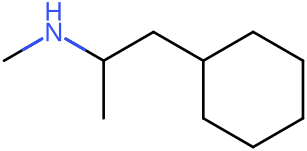
    Propylhexedrine molecular structure

    Propylhexedrine Stats & Data

    Obesin Benzedrex Propylhexadrine Hexahdromethamphetamine
    PubChem
    MW155.28
    FormulaC10H21N
    LogP3.5
    IUPAC1-cyclohexyl-N-methylpropan-2-amine
    InChIKeyJCRIVQIOJSSCQD-UHFFFAOYSA-N
    Chemical Class Cyclohexylisopropylamine
    Psychoactive Class Stimulant

    Pharmacology

    DrugBank
    State Solid

    Description

    Propylhexedrine is an alpha-adrenergic agonist often used in nasal decongestant inhalers. It is used to give temporary relief for nasal congestion from colds, allergic rhinitis, or allergies.

    Mechanism of Action

    Propylhexidrine causes the norepinephrine, dopamine, and serotonin (5HT) transporters to reverse their direction of flow. This inversion leads to a release of these transmitters from the vesicles to the cytoplasm and from the cytoplasm to the synapse. It also antagonizes the action of VMAT2, causing the release of more neurotransmitters.

    Pharmacodynamics

    Like other monoamine releasing stimulants propylhexedrine is active as a norepinephrine and dopamine releaser in the central nervous system. The acute effects of the drug closely resemble the physiological and psychological effects of an epinephrine-provoked fight-or-flight response, including increased heart rate and blood pressure, vasoconstriction (constriction of the arterial walls), bronchodilation, and hyperglycemia (increased blood sugar).

    Indication

    It is used to provide temporary symptomatic relief of nasal congestion due to colds, allergies and allergic rhinitis.

    Receptor Profile

    Receptor Actions

    Agonists
    TAAR1 agonist
    Inhibitors
    VMAT2 inhibitor
    Other
    Serotonin-norepinephrine-dopamine releasing agent (SNDRA)

    Receptor Binding

    Synaptic vesicular amine transporter antagonist
    Alpha-2C adrenergic receptor modulator
    Trace amine-associated receptor 1 agonist

    Toxicity

    PsychonautWiki DrugBank

    The toxicity of recreational propylhexedrine use has not been studied as extensively as that of amphetamine or methamphetamine but it is reasonable to assume that most if not all of the same risks apply. It is strongly recommended that one use harm reduction practices when using this substance.

    Toxicity (DrugBank)

    The signs and symptoms that are produced after the acute overdosage of Propylhexidrine include Psychosis, Burning sensation.

    Effect Profile

    Curated + 62 Reports
    Stimulant 4.9

    Moderate focus with strong anxiety/jitters, mild stimulation and euphoria

    Stimulation / Energy×3
    5
    Euphoria / Mood Lift×2
    5
    Focus / Productivity×2
    7
    Anxiety / Jitters×1
    10

    Tolerance & Pharmacokinetics

    drugs.wiki

    Tolerance Decay

    Full tolerance 1d Half tolerance 5d Baseline ~14d

    Cross-Tolerances

    Amphetamine
    Methamphetamine

    Experience Report Analysis

    Erowid BlueLight
    31 Reports
    15 Single-substance
    2005–2025 Date Range
    19 With Age Data
    8 Effects Detected

    Demographics

    Gender Distribution

    Age Distribution

    Reports Over Time

    Effect Analysis

    Erowid + Bluelight

    Effects aggregated from 62 experience reports (15 single-substance Erowid + 47 Bluelight)

    62 Reports
    117 Effects Detected
    46 Positive
    52 Adverse
    19 Neutral

    Effect Sentiment Distribution

    Confidence Distribution

    Each bar is the share of reports mentioning the effect; its whisker, and the band on the rows below, is the 95% interval: where the share could plausibly be with other reports of the same kind.

    Positive Effects 46

    Stimulation 80.7% (95% interval 69 to 89 percent) 87%
    Euphoria 66.2% (95% interval 54 to 77 percent) 87%
    Focus Enhancement 43.6% (95% interval 32 to 56 percent) 84%
    Tingling 42.6% (95% interval 30 to 57 percent) 86%
    Sociability Enhancement 38.3% (95% interval 26 to 53 percent) 85%
    Contentment 23.4% (95% interval 14 to 37 percent) 80%
    Music Enhancement 21.0% (95% interval 13 to 33 percent) 83%
    Thought Acceleration 19.1% (95% interval 10 to 32 percent) 81%
    Body High 14.5% (95% interval 8 to 25 percent) 79%
    Libido Enhancement 8.5% (95% interval 3 to 20 percent) 85%
    Motor Enhancement 6.4% (95% interval 2 to 17 percent) 80%
    Enhanced Colors 6.4% (95% interval 2 to 17 percent) 78%
    Joy 6.4% (95% interval 2 to 17 percent) 85%
    Confidence 6.4% (95% interval 2 to 17 percent) 88%
    Empathy 4.3% (95% interval 1 to 14 percent) 88%
    Meta-Awareness Of Irrationality 4.3% (95% interval 1 to 14 percent) 90%
    Empathogenic Connection 4.3% (95% interval 1 to 14 percent) 80%
    Creativity Enhancement 4.3% (95% interval 1 to 14 percent) 82%
    Mood Lift 4.3% (95% interval 1 to 14 percent) 88%
    Introspection 4.3% (95% interval 1 to 14 percent) 85%

    Adverse Effects 52

    Body Load 25.5% (95% interval 15 to 40 percent) 78%
    Headache 25.5% (95% interval 15 to 40 percent) 83%
    Anxiety 21.0% (95% interval 13 to 33 percent) 73%
    Nausea 17.7% (95% interval 10 to 29 percent) 85%
    Restlessness 17.0% (95% interval 9 to 30 percent) 77%
    Insomnia 17.0% (95% interval 9 to 30 percent) 79%
    Irritability 12.8% (95% interval 6 to 25 percent) 80%
    Dysphoria 12.8% (95% interval 6 to 25 percent) 83%
    Thought Disorganization 10.6% (95% interval 5 to 23 percent) 77%
    Taste Distortion 8.5% (95% interval 3 to 20 percent) 79%
    Jaw Clenching 6.4% (95% interval 2 to 17 percent) 82%
    Paranoia 6.4% (95% interval 2 to 17 percent) 82%
    Stomach Cramps 6.4% (95% interval 2 to 17 percent) 73%
    Vomiting 6.4% (95% interval 2 to 17 percent) 92%
    Tachycardia 6.4% (95% interval 2 to 17 percent) 87%
    Dry Mouth 6.4% (95% interval 2 to 17 percent) 82%
    Panic 4.3% (95% interval 1 to 14 percent) 90%
    Delusion 4.3% (95% interval 1 to 14 percent) 82%
    Tremor 4.3% (95% interval 1 to 14 percent) 85%
    Numbness 4.3% (95% interval 1 to 14 percent) 80%
    ⚠ Chest Pain 2.1% (95% interval 0 to 11 percent) 95%
    Show 31 more adverse effects
    Motor Suppression 4.3% (95% interval 1 to 14 percent) 72%
    Body Temperature Change 4.3% (95% interval 1 to 14 percent) 80%
    Distractibility 4.3% (95% interval 1 to 14 percent) 80%
    Heaviness 4.3% (95% interval 1 to 14 percent) 75%
    Lightness 4.3% (95% interval 1 to 14 percent) 72%
    Dizziness 4.3% (95% interval 1 to 14 percent) 82%
    Pain Enhancement 4.3% (95% interval 1 to 14 percent) 78%
    Anhedonia 2.1% (95% interval 0 to 11 percent) 90%
    Jitteriness 2.1% (95% interval 0 to 11 percent) 75%
    Anger 2.1% (95% interval 0 to 11 percent) 90%
    Auditory Hallucination 2.1% (95% interval 0 to 11 percent) 85%
    Emotional Lability 2.1% (95% interval 0 to 11 percent) 85%
    Hot Flashes 2.1% (95% interval 0 to 11 percent) 90%
    Chills 2.1% (95% interval 0 to 11 percent) 75%
    Muscle Twitching 2.1% (95% interval 0 to 11 percent) 80%
    Peripheral Imagery 2.1% (95% interval 0 to 11 percent) 75%
    Dissociation 2.1% (95% interval 0 to 11 percent) 70%
    Thought Deceleration 2.1% (95% interval 0 to 11 percent) 75%
    Diarrhea 2.1% (95% interval 0 to 11 percent) 80%
    Disrupted Sleep Architecture 2.1% (95% interval 0 to 11 percent) 80%
    Ego Inflation 2.1% (95% interval 0 to 11 percent) 90%
    Throat Irritation 2.1% (95% interval 0 to 11 percent) 80%
    Genital Sensitivity Change 2.1% (95% interval 0 to 11 percent) 90%
    Dry Eyes 2.1% (95% interval 0 to 11 percent) 85%
    Itching 2.1% (95% interval 0 to 11 percent) 85%
    Pupil Constriction 2.1% (95% interval 0 to 11 percent) 85%
    Muscle Cramp 2.1% (95% interval 0 to 11 percent) 85%
    Sadness 2.1% (95% interval 0 to 11 percent) 80%
    Hypersomnia 2.1% (95% interval 0 to 11 percent) 85%
    Isolation Preference 2.1% (95% interval 0 to 11 percent) 80%
    Fear 2.1% (95% interval 0 to 11 percent) 80%
    Show 19 neutral or unclassified mentions
    Appetite Suppression 31.9% (95% interval 20 to 46 percent)
    Sedation 16.2% (95% interval 9 to 27 percent)
    Sweating 14.9% (95% interval 7 to 28 percent)
    Visual Trails 6.4% (95% interval 2 to 17 percent)
    Visual Hallucination 6.4% (95% interval 2 to 17 percent)
    Entity Imagery 4.3% (95% interval 1 to 14 percent)
    Pupil Dilation 4.3% (95% interval 1 to 14 percent)
    Heart Rate Increase 4.3% (95% interval 1 to 14 percent)
    Flushing 4.3% (95% interval 1 to 14 percent)
    Involuntary Movements 2.1% (95% interval 0 to 11 percent)
    Field Narrowing 2.1% (95% interval 0 to 11 percent)
    Frequent Urination 2.1% (95% interval 0 to 11 percent)
    Lucid Dreaming 2.1% (95% interval 0 to 11 percent)
    Penile Effects 2.1% (95% interval 0 to 11 percent)
    Skin Crawling 2.1% (95% interval 0 to 11 percent)
    Time Dilation 2.1% (95% interval 0 to 11 percent)
    Pressure 2.1% (95% interval 0 to 11 percent)
    Drowsiness 2.1% (95% interval 0 to 11 percent)
    Depersonalization 2.1% (95% interval 0 to 11 percent)

    Also reported in combinations. In the 16 Propylhexedrine reports where another drug was taken too, 0 mention hospital, emergency services or an overdose, 0 a seizure and 1 psychosis (too few reports for percentages). In the 15 single-substance reports: 2, 0 and 0. These are not in the figures above: they cannot be put down to Propylhexedrine alone, and a mention is not always something that happened to the writer.

    Dosage Distribution

    Dose distribution from experience reports, one dose per report (the first listed). Doses above Q3 + 3×IQR, far above what people typically take, are left out of the median and range and listed under each route: most are real heavy doses or overdoses, not mistakes.

    Median: 250.0 mg IQR: 137.5–250.0 mg n=11

    1 report gave a dose above the typical range (1,000 mg), so it is not in the figures above. Listing a dose here does not mean it is safe.

    Show the report

    Real-World Dose Distribution

    Erowid

    From 46 of 51 recorded dose entries: those that state a weight (mg, g or µg), in routes with at least five of them. Values above Q3 + 3×IQR, far above what people typically take, are left out; they can include real heavy doses and overdoses, not only mistakes.

    Oral (n=45)

    Median: 250.0mg 25th: 250.0mg 75th: 250.0mg 90th: 500.0mg

    Common Combinations

    Most co-occurring substances, as a share of all 31 reports filed under Propylhexedrine; whiskers are 95% intervals

    Form / Preparation

    Most common forms and preparations, as a share of the 8 reports that give one

    Too few reports for bars: these forms come from 8 reports, and a bar is drawn only from 20 reports or more. With fewer, a percentage cannot tell a common effect from a rare one. Counts are shown instead. Why 20?

    • Liquid 3 of 8
    • Pill / Tablet 2 of 8
    • Capsule 2 of 8

    Body-Weight Dosing

    Dose per kg of body weight, one dose per report (the first listed), from reports giving a weight of 30–250 kg. Doses above Q3 + 3×IQR, far above what people typically take, are left out of the median and range and listed under each route.

    Median: 2.9 mg/kg IQR: 1.966–3.449 mg/kg n=11

    1 report gave a dose above the typical range (11.025 mg/kg), so it is not in the figures above. Listing a dose here does not mean it is safe.

    Show the report

    Redose Patterns

    Redosing behavior across 15 reports

    6 of 15 Redosed
    1.7 Avg Doses
    60m Median Interval

    Too few reports for a chart: redosing is known from 15 reports, and a split is drawn only from 20 reports or more. Counts are shown instead. Why 20?

    • Single dose 9 of 15
    • Redosed 6 of 15

    Legal Status

    Controlled internationally under the UN Convention on Psychotropic Substances 1971.
    Country Status Notes
    Australia Propylhexedrine is an S4 substance in Australia.
    Brazil Propylhexedrine is a Class B1 substance in Brazil.
    Canada Propylhexedrine was long reported to be a Schedule V substance in Canada. In 2022, this status changed and propylhexedrine has since been removed from control under the Controlled Drugs and Substances Act.
    Germany Propylhexedrine is regulated as a prescription medicine in Germany. Initially, propylhexedrine products were available over-the-counter. However, this changed in the 1970s and propylhexedrine is now regulated as a prescription product in Germany.
    Switzerland Propylhexedrine is not controlled under Buchstabe A, B, C and D. It is sporadically used medicinally.
    United Kingdom Propylhexedrine was formerly a Class C substance in the United Kingdom, but was deregulated in 1995. Propylhexedrine was used recreationally during a brief period in the 1970s after increased government regulation on earlier decongestants.
    United States On the 4th of April 1988, propylhexedrine was designated a controlled substance (Schedule V) in the United States. This was done to satisfy U.S. compliance with an international treaty. However, in 1991, this action was reversed and propylhexedrine was removed from control under the Controlled Substances Act. This was based on the opinion of the Drug Enforcement Administration that propylhexedrine did not warrant control. The substance has remained unregulated under the Controlled Substances Act in the United States ever since. Furthermore, pursuant to DEA regulations, certain Benzedrex inhalers are specifically exempt from the Controlled Substances Act. Propylhexedrine remains regulated under the laws of several U.S. states. These states include the states of Alaska, Arizona, Florida, Georgia, Idaho, Kansas, and Rhode Island.
    ← Back to Propylhexedrine