
Mirtazapine Stats & Data
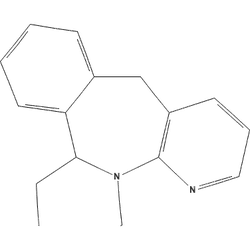
CN1CCN2c3ncccc3Cc3ccccc3C2C1RONZAEMNMFQXRA-UHFFFAOYSA-NPharmacology
DrugBankDescription
Mirtazapine is a tetracyclic _piperazino-azepine_ antidepressant agent that was initially approved for the treatment of major depressive disorder (MDD) in the Netherlands in 1994. This drug was first manufactured by Organon Inc., and received FDA approval in 1997 for the treatment of major depressive disorder. The effects of this drug may be observed as early as 1 week after beginning therapy. In addition to its beneficial effects in depression, mirtazapine has been reported to be efficacious in the off-label management of various other conditions. It may improve the symptoms of neurological disorders, reverse weight loss caused by medical conditions, improve sleep, and prevent nausea and vomiting after surgery.
Mechanism of Action
**Summary** The mechanism of action of mirtazapine is not fully understood but may be explained by its effects on central adrenergic and serotonergic activity. This drug exhibits a fast onset of action, a high level of response, a manageable side-effect profile, and dual noradrenergic and serotonergic effects that are unique from the effects of other antidepressants. **Effects on various receptors** It has been shown that both noradrenergic and serotonergic activity increase following mirtazapine administration. The results of these studies demonstrate mirtazapine exerts antagonist activity at presynaptic α2-adrenergic inhibitory autoreceptors and heteroreceptors in the central nervous system. This is thought to lead to enhanced noradrenergic and serotonergic activity , which are known to improve the symptoms of depression and form the basis of antidepressant therapy. Mirtazapine is a strong antagonist of serotonin 5-HT2 and 5-HT3 receptors. It has not been found to bind significantly to the serotonin 5-HT1A and 5-HT1B receptors but indirectly increases 5-HT1A transmission. In addition to the above effects, mirtazapine is a peripheral α1-adrenergic antagonist. This action may explain episodes of orthostatic hypotension that have been reported after mirtazapine use. Mirtazapine is a potent histamine (H1) receptor antagonist, which may contribute to its powerful sedating effects.
Pharmacodynamics
**General effects and a note on suicidality** Mirtazapine is effective in treating moderate to severe depression and treats many symptoms normally associated with this condition. These symptoms may include disturbed sleep, lack of appetite, and anhedonia, in addition to anxiety.. It is important to note that suicidal ideation and behavior may emerge or increase during treatment with mirtazapine, as with any other antidepressant. This risk is especially pronounced in younger individuals. Patients, medical professionals, and families should monitor for suicidal thoughts, worsening depression, anxiety, agitation, sleep changes, irritable behavior, aggression, impulsivity, restlessness, and other unusual behavior when this drug is taken or the dose is adjusted. Do not administer mirtazapine to children. When deciding to prescribe this drug, carefully consider the increased risk of suicidal thoughts and behavior, especially in young adults. **Effects on appetite and weight gain** In addition to the above effects, mirtazapine exerts stimulating effects on appetite, and has been used for increasing appetite and decreasing nausea in cancer patients. Some studies and case reports have shown that this drug improves eating habits and weight gain in patients suffering from anorexia nervosa when administered in conjunction with psychotherapy and/or other psychotropic drugs.
Metabolism
Mirtazapine is heavily metabolized in humans. Demethylation and hydroxylation and subsequent glucuronide conjugation are the major pathways by which mirtazapine is metabolized. Data from in vitro studies on human liver microsomes show that cytochrome 2D6 and 1A2 lead to the formation of the _8-hydroxy metabolite_ of mirtazapine. The CYP3A enzyme metabolizes this drug into its _N-desmethyl and N-oxide_ metabolites. There are various other unconjugated metabolites of this drug that are pharmacologically active, but are measured in the blood at limited concentrations.FDA label, A177826
Absorption
The absorption of this drug is rapid and complete. Due to first pass metabolism in the liver and metabolism in the gut wall, absolute bioavailability is about 50%.FDA label,A177826 Peak blood concentrations are attained within about 2 hours after an oral dose. Food has little effect on the absorption of mirtazapine, and no dose adjustment is required if it is taken with food. Steady-state levels are achieved by about 5 days after the initial dose.FDA label, A177826 Mirtazapine pharmacokinetics vary across gender and age range. Females and the elderly population have been shown to have higher blood concentrations in comparison to males and younger adults.
Indication
This drug is indicated for the treatment of major depressive disorder and its associated symptoms. Mirtazapine has been used off-label for a variety of conditions including panic disorder, generalized anxiety disorder, dysthymia, tension headaches, hot flushes, post-traumatic stress disorder (PTSD), sleep disorders, substance abuse disorders, and sexual disorders, among others.
Protein Binding
Mirtazapine is about 85% bound to plasma proteins.
Elimination
This drug is mainly excreted by the kidney. It is 75% eliminated in the urine and 15% eliminated in the feces.
Volume of Distribution
The volume of distribution after an oral steady-state dose was measured to be 107 ± 42L in a pharmacokinetic study.
Clearance
Total body clearance in males was found to be 31 L/h in a clinical pharmacokinetics study after intravenous administration. **Clearance in elderly patients** Mirtazapine clearance is slower in the elderly than in younger subjects. Exercise caution when this drug is given to elderly patients. In a clinical trial, elderly males showed a marked decrease in mirtazapine clearance when compared to young males taking the same dose. This difference was less significant when clearance was compared between elderly females and younger females taking mirtazapine. **Clearance in hepatic and renal impairment** Patients with hepatic and renal impairment have decreased rates of clearance and dosage adjustments may be necessary for these patients. Moderate renal impairment and hepatic impairment cause about a 30% decrease in mirtazapine clearance. Severe renal impairment leads to a 50% decrease in mirtazapine clearance.
Measured Affinities
Guide to PHARMACOLOGYMeasured binding and functional data for mirtazapine, curated by the IUPHAR/BPS Guide to PHARMACOLOGY. Each row cites the paper it came from. Lower concentrations mean tighter binding — a value in the sub-nanomolar range indicates a very potent interaction.
| Target | Action | Measure | Value | Concentration | Species | Source |
|---|---|---|---|---|---|---|
| 5-HT2C receptor HTR2C | Antagonist | pKi | 7.41 | 38.9 nM | Human | PMID 15771415 |
| 5-HT2A receptor HTR2A | Antagonist | pKi | 7.16 | 69.18 nM | Human | PMID 15771415 |
| α2A-adrenoceptor ADRA2A | Antagonist | pIC50 | 7.1 | 79.43 nM | Human | PMID 10636247 |
| α2C-adrenoceptor ADRA2C | Antagonist | pIC50 | 6.7 | 199.53 nM | Human | PMID 10636247 |
| α2A-adrenoceptor ADRA2A | Antagonist | pKi | — | — | Human | — |
| α2B-adrenoceptor ADRA2B | Antagonist | pKi | — | — | Human | — |
| α2C-adrenoceptor ADRA2C | Antagonist | pKi | — | — | Human | — |
Reading this. pKi, pEC50 and pIC50 are negative log molar values, so a higher number means a tighter interaction; the concentration column converts them for you. Values from non-human species are laboratory measurements and do not translate directly to human effect. Receptor affinity is not a dose — it describes what a molecule binds, not how much of it is safe to take.
Receptor data from the IUPHAR/BPS Guide to PHARMACOLOGY (v2026.2), licensed CC BY-SA 4.0. Matched to this substance by InChIKey.
Mirtazapine is not known to cause brain damage, and has extremely low toxicity relative to dose. Similar to other psychedelic drugs, there are relatively few physical side effects associated with mirtazapine exposure. Various studies have shown that in reasonable doses in a careful context, it presents no negative cognitive, psychiatric or toxic physical consequences of any sort.
LD50
LD50: 600-720mg/kg (oral, mice) (L1855)LD50: 320-490mg/kg (oral, rat) (L1855)
Carcinogenicity
No indication of carcinogenicity to humans (not listed by IARC).
Liver injury risk
Low concern (rare serious cases reported)
Overdose
Mirtazapine is considered to be relatively safe in the event of an overdose, although it is considered slightly more toxic in overdose than most of the SSRIs (except citalopram). Unlike the TCAs, mirtazapine showed no significant cardiovascular adverse effects at 7 to 22 times the maximum recommended dose. Case reports of overdose with as much as 30 to 50 times the standard dose described the drug as relatively nontoxic, compared to TCAs.
Addiction & dependence
Mirtazapine is not habit-forming when used as a hallucinogen and the desire to use it can actually decrease with use. It is most often self-regulating. Tolerance to the effects of mirtazapine are built almost immediately after ingestion.
Tolerance & Pharmacokinetics
drugs.wikiTolerance Decay
Formal human data on tolerance are limited. Clinically, sedation often diminishes over 1–4 weeks of regular nightly dosing (partial tolerance), while antidepressant benefits generally require sustained dosing and do not show euphoric tolerance patterns. No reliable evidence for cross‑tolerance with classic serotonergic psychedelics; many reports suggest mirtazapine blunts them. Data quality is mainly clinical observation and user reports.
Cross-Tolerances
Experience Report Analysis
ErowidDemographics
Gender Distribution
Age Distribution
Reports Over Time
Effect Analysis
ErowidEffects aggregated from 37 experience reports (37 single-substance Erowid)
Effect Sentiment Distribution
Confidence Distribution
Each bar is the share of reports mentioning the effect; its whisker, and the band on the rows below, is the 95% interval: where the share could plausibly be with other reports of the same kind.
Positive Effects 4
Adverse Effects 5
Show 2 neutral or unclassified mentions
Also reported in combinations. In the 29 Mirtazapine reports where another drug was taken too, 4 (13.8%) mention hospital, emergency services or an overdose, 1 (3.4%) a seizure and 3 (10.3%) psychosis. In the 37 single-substance reports: 5.4%, 0.0% and 0.0%. One or more of the three comes up more often in the combination reports (27.6% against 5.4%), by more than chance would explain; that does not show the combination caused it. These are not in the figures above: they cannot be put down to Mirtazapine alone, and a mention is not always something that happened to the writer.
Dosage Distribution
Dose distribution from experience reports, one dose per report (the first listed). Doses above Q3 + 3×IQR, far above what people typically take, are left out of the median and range and listed under each route: most are real heavy doses or overdoses, not mistakes.
Real-World Dose Distribution
ErowidFrom 91 of 93 recorded dose entries: those that state a weight (mg, g or µg), in routes with at least five of them. Values above Q3 + 3×IQR, far above what people typically take, are left out; they can include real heavy doses and overdoses, not only mistakes.
Oral (n=89)
Common Combinations
Most co-occurring substances, as a share of all 66 reports filed under Mirtazapine; whiskers are 95% intervals
Form / Preparation
Most common forms and preparations, as a share of the 13 reports that give one
Too few reports for bars: these forms come from 13 reports, and a bar is drawn only from 20 reports or more. With fewer, a percentage cannot tell a common effect from a rare one. Counts are shown instead. Why 20?
- Pill / Tablet 12 of 13
Body-Weight Dosing
Dose per kg of body weight, one dose per report (the first listed), from reports giving a weight of 30–250 kg. Doses above Q3 + 3×IQR, far above what people typically take, are left out of the median and range and listed under each route.
4 reports gave a dose above the typical range (2.182–3.621 mg/kg), so they are not in the figures above. Listing a dose here does not mean it is safe.
Show the reports
- 3.621 mg/kg
- 3.309 mg/kg · another drug taken too
- 2.708 mg/kg · another drug taken too
- 2.182 mg/kg
Redose Patterns
Redosing behavior across 55 reports
Harm Reduction
drugs.wikiMirtazapine blocks central presynaptic α2‑adrenergic auto/heteroreceptors and is a potent antagonist at 5‑HT2 and 5‑HT3 as well as H1 histamine receptors; H1 antagonism largely explains strong sedation, weight gain, and next‑day grogginess, especially at lower doses. Older adults and people with hepatic/renal impairment are more susceptible to sedation, orthostatic hypotension, and falls; dose conservatively and rise slowly. Additive CNS depression occurs with alcohol, benzodiazepines, Z‑drugs, sedating antihistamines, and opioids; avoid driving or hazardous tasks until individual response is known. Serotonin syndrome from mirtazapine alone is rare but reported; risk increases with MAOIs, methylene blue/linezolid, and other serotonergic agents (e.g., DXM, tramadol, triptans); seek urgent care if symptoms such as agitation, tremor, clonus, hyperreflexia, or hyperthermia emerge. Rare but serious blood dyscrasias (neutropenia/agranulocytosis) can occur; stop and obtain urgent evaluation for fever, sore throat, mouth ulcers, or signs of infection. Weight gain and increased appetite are common; monitor weight and lipids during long‑term use. Elevations in liver enzymes and rare liver injury have been reported; evaluate persistent RUQ pain, jaundice, or dark urine. Mania/hypomania may emerge in bipolar disorder; screen for bipolarity prior to starting and monitor for mood switches. Orthostatic hypotension may occur due to peripheral α1 antagonism; rise slowly and hydrate, particularly at initiation. Psychedelics (LSD/psilocybin) are commonly blunted owing to 5‑HT2A antagonism; subjective responses vary, and combinations can be unpredictable. Fluvoxamine and other CYP inhibitors may raise mirtazapine exposure; monitor for excess sedation and consider dose adjustment. For overdose, there is no antidote; management is supportive with airway protection and cardiac monitoring.
References
Cited references
- DrugBank – Mirtazapine DB00370 (mechanism, targets, half‑life, α1/H1 antagonism)
- DrugBank – Review A177856 (dosing, sedation, alcohol/benzodiazepine caution, hepatic/renal considerations)
- DrugBank – Review A559 (somnolence more frequent at lower doses; tolerability profile)
- NCBI StatPearls – Mirtazapine (adverse effects: drowsiness, weight gain, cholesterol; hematologic and hepatic events; clonidine interaction; overdose management)
- NCBI PDQ – Depression in Cancer (mechanism summary; sedation/weight gain; agranulocytosis; rare serotonin syndrome, especially with potent serotonergic combinations)
- DrugBank – Case report A255153 (mirtazapine‑induced serotonin syndrome, rare)
- DrugBank – Animal study A13525 (mirtazapine attenuates 5‑HT syndrome hyperthermia via 5‑HT2A antagonism)
- NIHR/NCBI – Therapeutics Letter summary NBK598513 (rates incl. neutropenia/agranulocytosis; strong sedation; impairment warning)
- Drugs‑Forum – Community reports on psychedelics blunting/variability with mirtazapine (anecdotal)