
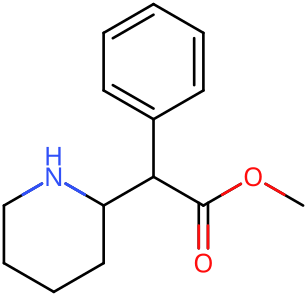
Methylphenidate Stats & Data
COC(=O)C(C1CCCCN1)c1ccccc1DUGOZIWVEXMGBE-UHFFFAOYSA-NInteraction Warnings
The neurotoxic effects of MDMA may be increased when combined with other stimulants.
This combination may increase strain on the heart.
Pharmacology
DrugBankDescription
Methylphenidate is a central nervous system stimulant used most commonly in the treatment of Attention-Deficit/Hyperactivity Disorder (ADHD) and for narcolepsy. Also known as the marketed products Ritalin, Concerta, or Biphentin, methylphenidate is used with other treatment modalities (psychological, educational, cognitive behaviour therapy, etc) to improve the following group of developmentally inappropriate symptoms associated with ADHD: moderate-to-severe distractibility, short attention span, hyperactivity, emotional lability, and impulsivity. Long-acting formulations of psychostimulants such as methylphenidate, DB01576, and DB01255 are considered the most effective and widely used treatment for ADHD, and are considered first-line options for children, adolescents, and adults as recommended by CADDRA (Canadian ADHD Resource Alliance). CADDRA recommends the use of methylphenidate due to long term studies, of over twenty years in duration, which show methylphenidate is safe and effective. While its exact mechanism is unclear, methylphenidate (MPH) has been shown to act as a norepinephrine and dopamine reuptake inhibitor (NDRI), thereby increasing the presence of these neurotransmitters in the extraneuronal space and prolonging their action.
Mechanism of Action
While its exact mechanism is unclear, methylphenidate (MPH) has been shown to act as a norepinephrine and dopamine reuptake inhibitor (NDRI), thereby increasing the presence of these neurotransmitters in the extraneuronal space and prolonging their action. There is a dose-related effect of psychostimulants on receptor stimulation, where higher doses are shown to increase norepinephrine (NE) and dopamine (DA) efflux throughout the brain which can result in impaired cognition and locomotor-activating effects. In contrast, low doses are found to selectively activate NE and DE neurotransmission within the prefrontal cortex which is an area of the brain thought to play a prominent role in ADHD pathophysiology, thereby improving clinical efficacy and preventing side effects. The lower doses used to treat ADHD are not associated with the locomotor-activating effects associated with higher doses and instead reduce movement, impulsivity, and increase cognitive function including sustained attention and working memory. Methylphenidate's beneficial effects in sustaining attention have also been shown to be mediated by alpha-1 adrenergic receptor activity.
Pharmacodynamics
Methylphenidate is a racemic mixture comprised of the d- and l-isomers. The d-isomer is more pharmacologically active than the l-isomer. Radioligand binding studies demonstrate that binding of methylphenidate in the brain is localized to dopamine-rich areas, in particular in the prefrontal cortex which has been demonstrated to play a prominent role in ADHD pathophysiology. In a number of animal models, methylphenidate enhances locomotor activity and induces stereotypic behaviours.
Metabolism
Methylphenidate is hepatically metabolized. More specifically, it is rapidly and extensively metabolized by carboxylesterase CES1A1. Via this enzyme, methylphenidate undergoes de-esterification to ritalinic acid (a-phenyl-2-piperidine acetic acid, PPAA), which has little to no pharmacologic activity.
Absorption
Concerta®: Methylphenidate is readily absorbed. Following oral administration of Concerta, plasma methylhphenidate concentrations reach an initial maximum at about 1 hour followed by gradual ascending concentrations over the next 5-9 hours. Mean times to reach peak plasma concentrations across all doses of Concerta occurred between 6-10 hours. Once daily dosing minimizes the fluctuations between peak and trough concentrations associated with multiple doses of immediate-release methylphenidate treatments. Depending on the doses provided, Cmax was found to range from 6.0-15.0ng/mL, Tmax ranged from 8.1-9.4h, and AUC ranged from 50.4-121.5 ng·h/mL in children. When provided as Concerta®, methylphenidate is released through the patented Osmotic Controlled-Release Oral Delivery (OROS) system where 22% of the dose is provided as an immediate release and 78% is provided through a gradual release. OROS is comprised of an osmotically active trilayer core surrounded by a semipermeable membrane with an immediate-release drug overcoat. Within an aqueous environment, such as the stomach, the drug overcoat, which consists of 22% of the dose, dissolves within one hour, providing an initial immediate-release formulation of methylphenidate. Water then permeates through the membrane into the tablet core where the osmotically active polymer excipients expand, allowing methylphenidate to release slowly through the orifice over a period of 6-7 hours.
Indication
Methylphenidate is indicated for the treatment of Attention Deficit Hyperactivity Disorder (ADHD) in patients 6 years of age and older and for the treatment of narcolepsy.
Half-life
Concerta: The half-life of methylphenidate in adults following oral administration of Concerta® was approximately 3.5 h. Biphentin: Methylphenidate is eliminated from plasma with a mean half-life of 2.4 hours in children and 2.1 hours in adults. Methylphenidate (immediate release): Methylphenidate is eliminated from the plasma with a mean half-life of 2.4 hours in children and 2.1 hours in adults.
Protein Binding
Concerta: In humans, 15 ± 5% of methylphenidate in the blood is bound to plasma proteins. Biphentin: In blood, methylphenidate and its metabolites are distributed between plasma (57%) and erythrocytes (43%). Methylphenidate and its metabolites exhibit low plasma protein binding (approximately 15%). Methylphenidate (immediate release): In blood, methylphenidate and its metabolites are distributed between plasma (57%) and erythrocytes (43%). Methylphenidate and its metabolites exhibit low plasma protein binding (approx. 15%).
Elimination
After oral administration of an immediate release formulation of methylphenidate, 78%-97% of the dose is excreted in the urine and 1%-3% in the feces in the form of metabolites within 48-96 hours. Only small quantities (<1%) of unchanged methylphenidate appear in the urine. Most of the dose is excreted in the urine as ritalinic acid (60%-86%), the remainder being accounted for by minor metabolites.
Volume of Distribution
Concerta: Plasma methylphenidate concentrations in adults decline bi-exponentially following oral administration. Biphentin: The apparent distribution volume of methylphenidate in children is approximately 20 L/kg, with substantial variability (11 to 33 L/kg). Methylphenidate (immediate release): The apparent distribution volume of methylphenidate in children was approximately 20 L/kg, with substantial variability (11-33 L/kg). The volume of distribution after an intravenous dose (Vss) is 2.23 L/kg for the racemate in healthy adult volunteers.
Clearance
The apparent mean systemic clearance after an oral dose is 10.2 and 10.5 L/h/kg in children and adults, respectively for a 0.3 mg/kg dose, and 0.565 L/h/kg after an intravenous dose of the racemate in healthy adult volunteers.
Receptor Profile
Receptor Actions
Receptor Binding
Measured Affinities
Guide to PHARMACOLOGYMeasured binding and functional data for methylphenidate, curated by the IUPHAR/BPS Guide to PHARMACOLOGY. Each row cites the paper it came from. Lower concentrations mean tighter binding — a value in the sub-nanomolar range indicates a very potent interaction.
| Target | Action | Measure | Value | Concentration | Species | Source |
|---|---|---|---|---|---|---|
| NET SLC6A2 | Inhibition | pIC50 | 7.21 | 61.66 nM | Human | — |
| DAT SLC6A3 | Inhibition | pIC50 | 7.1 | 79.43 nM | Human | PMID 17228864 |
Reading this. pKi, pEC50 and pIC50 are negative log molar values, so a higher number means a tighter interaction; the concentration column converts them for you. Values from non-human species are laboratory measurements and do not translate directly to human effect. Receptor affinity is not a dose — it describes what a molecule binds, not how much of it is safe to take.
Receptor data from the IUPHAR/BPS Guide to PHARMACOLOGY (v2026.2), licensed CC BY-SA 4.0. Matched to this substance by InChIKey.
History & Culture
1944–present
Methylphenidate was first synthesized in 1944 by Swiss chemist Leandro Panizzon while working for the pharmaceutical company CIBA (now Novartis). Panizzon named the compound after his wife Marguerite, nicknamed "Rita," who became the first person to take the substance. Rita used methylphenidate to compensate for low blood pressure and described its effects to her husband, leading to the brand name "Ritalin." The drug was not identified as a central nervous system stimulant until 1954.
1955–1960s
Methylphenidate received approval for medical use in the United States in 1955 and was introduced to the market in 1957. It was originally marketed as a mixture of two racemates—80% erythro and 20% threo isomers—under the brand name Centedrin. Subsequent research demonstrated that the central stimulant activity was primarily associated with the threo racemate, leading to modern formulations that contain only the threo isomer in a 50:50 mixture of d- and l-isomers. When first released in the United States, methylphenidate was also available in a parenteral (injectable) form intended for use by medical professionals. This formulation was indicated to produce a focused, talkative state that could help patients overcome resistance to therapy. The parenteral form was later discontinued due to concerns about limited therapeutic benefit and the potential for inducing psychic dependence. The drug's initial medical applications included treatment of barbiturate-induced coma, narcolepsy, and depression. It was also prescribed for memory deficits in elderly patients. During its history, methylphenidate has been prescribed for various other conditions including chronic fatigue, and at one point was marketed as a general "pep pill."
1960s–present
Beginning in the 1960s, methylphenidate came to be used for treating children with attention deficit hyperactivity disorder, building on foundational work by American psychiatrist Charles Bradley. Bradley had conducted earlier studies on the use of psychostimulant drugs such as Benzedrine with children then described as "maladjusted." Production and prescription of methylphenidate rose substantially during the 1990s, particularly in the United States, as the ADHD diagnosis became better understood and more generally accepted within medical and mental health communities. In 2000, Alza Corporation received FDA approval to market Concerta, a modified-release formulation utilizing an osmotic-controlled release oral delivery system. Long-acting formulations of methylphenidate are now considered among the most effective treatments for ADHD and are recommended as first-line options for children, adolescents, and adults. Studies spanning over twenty years have demonstrated the drug's safety and efficacy for long-term use. By 2023, methylphenidate had become the 50th most commonly prescribed medication in the United States, with more than 13 million prescriptions written annually.
Subjective Effects
Physical
The physical effects of methylphenidate can be broken down into several components which progressively intensify proportional to dosage.
- Stimulation: In terms of its effects on the physical energy levels of the user, methylphenidate is usually considered to be energetic and stimulating in a fashion that is distinct but much weaker than that of amphetamine or methamphetamine and stronger than that of modafinil and caffeine. At lower to moderate doses, it encourages general productivity but at higher dosages it encourages physical activities such as dancing, socializing, running, or cleaning. The particular style of stimulation which methylphenidate presents can be described as forced. This means that at higher dosages, it becomes difficult or impossible to keep still as jaw clenching, involuntarily bodily shakes and vibrations become present, resulting in extreme shaking of the entire body, unsteadiness of the hands, and a general lack of motor control.
- Increased heart rate
- Dehydration
- Appetite suppression
- Increased perspiration
Cognitive
The cognitive effects of methylphenidate can be broken down into several components which progressively intensify proportional to dosage. The general head space of methylphenidate is described by many as one of extreme mental stimulation, increased focus, and powerful euphoria. It contains a large number of typical stimulant cognitive effects. Although negative side effects are usually mild at low to moderate dosages, they become increasingly likely to manifest themselves with higher amounts or extended usage. This particularly holds true during the offset of the experience.
- Euphoria: In comparison to other stimulants such as amphetamine, this effect is very mild and rare but occasionally occurs at higher dosages.
- Focus enhancement: This component is most effective at low to moderate dosages as anything higher will usually impair concentration.
- Wakefulness
- Memory enhancement: Therapeutic doses of methylphenidate improve performance on working memory tests both in normal functioning individuals and those with ADHD.
- Thought acceleration
- Analysis enhancement
- Motivation enhancement
- Anxiety
- Depression
Forked from Subjective Effect Documentation by Josie Kins, September 2015. Via dose.wiki (CC0).
A toxic dose of methylphenidate is considered to be more than 2 mg/kg or 60 mg of an immediate-release formulation, or more than 4 mg/kg or 120 mg of an intact extended-release formulation. In the majority of cases in one study, methylphenidate overdose was asymptomatic or characterized by minor symptoms even in children under age 6. However, a significant amount of patients (31%) in the study developed symptoms typical of stimulant overdose, most commonly tachycardia, agitation, and paradoxically lethargy. In the 2012 National Poison Data System report, methylphenidate exposure was reported 9,787 times, with 1,609 reporting no adverse effects, 1,009 reporting mild effects, 662 reporting moderate effects, 33 reporting major symptoms, and no cases resulting in death.
LD50
LD50: 190 mg/kg (oral, mice)
Carcinogenicity
No indication of carcinogenicity to humans (not listed by IARC).
Addiction & dependence
In terms of its tolerance, methylphenidate can be used multiple days in a row for extended periods of time and is often prescribed to be used in this way. Tolerance to many of the effects of methyphenidate develops with prolonged and repeated use. This results in users having to administer increasingly large doses to achieve the same effects.
Effect Profile
Curated + 147 ReportsStrong stimulation, euphoria, and focus with strong anxiety/jitters
Tolerance & Pharmacokinetics
drugs.wikiTolerance Decay
Estimates reflect anecdotal patterns for stimulants: rapid tolerance accrual with daily or high-frequency use and partial reversal over 1–2 weeks of abstinence; individual variation is large.
Demographics
Gender Distribution
Age Distribution
Reports Over Time
Effect Analysis
Erowid + BluelightEffects aggregated from 147 experience reports (118 single-substance Erowid + 29 Bluelight)
Effect Sentiment Distribution
Confidence Distribution
Each bar is the share of reports mentioning the effect; its whisker, and the band on the rows below, is the 95% interval: where the share could plausibly be with other reports of the same kind.
Positive Effects 29
Adverse Effects 42
Show 19 more adverse effects
Show 10 neutral or unclassified mentions
Also reported in combinations. In the 102 Methylphenidate reports where another drug was taken too, 12 (11.8%) mention hospital, emergency services or an overdose, 5 (4.9%) a seizure and 2 (2.0%) psychosis. In the 118 single-substance reports: 11.0%, 2.5% and 3.4%. These are not in the figures above: they cannot be put down to Methylphenidate alone, and a mention is not always something that happened to the writer.
Dose-Response Correlation
How effect frequency changes across dose levels. Whiskers, and the numbers' hover text, give each figure's 95% interval.
Not drawn, too few reports (a dose tier needs 20): Insufflated Common (n=11), Oral Heavy (n=13). Why 20?
Subjective Effect Ontology
Experience ReportsStructured effect tags extracted from 249 Erowid & Bluelight experience reports using a controlled vocabulary of 220+ canonical effects across 15 domains.
Emotional
Motor
Dosage Distribution
Dose distribution from experience reports, one dose per report (the first listed). Doses above Q3 + 3×IQR, far above what people typically take, are left out of the median and range and listed under each route: most are real heavy doses or overdoses, not mistakes.
Insufflated
3 reports gave a dose above the typical range (162–230 mg), so they are not in the figures above. 2 of them mention hospital, emergency services or an overdose. Listing a dose here does not mean it is safe.
Real-World Dose Distribution
ErowidFrom 279 of 316 recorded dose entries: those that state a weight (mg, g or µg), in routes with at least five of them. Values above Q3 + 3×IQR, far above what people typically take, are left out; they can include real heavy doses and overdoses, not only mistakes.
Oral (n=161)
Insufflated (n=103)
Rectal (n=5)
Common Combinations
Most co-occurring substances, as a share of all 220 reports filed under Methylphenidate; whiskers are 95% intervals
Form / Preparation
Most common forms and preparations, as a share of the 151 reports that give one; whiskers are 95% intervals
Body-Weight Dosing
Dose per kg of body weight, one dose per report (the first listed), from reports giving a weight of 30–250 kg. Doses above Q3 + 3×IQR, far above what people typically take, are left out of the median and range and listed under each route.
Insufflated
2 reports gave a dose above the typical range (2.647–2.983 mg/kg), so they are not in the figures above. 1 of them mentions hospital, emergency services or an overdose. Listing a dose here does not mean it is safe.
Show the reports
- 2.983 mg/kg · mentions hospital, emergency services or an overdose
- 2.647 mg/kg
Oral
3 reports gave a dose above the typical range (3.176–8.815 mg/kg), so they are not in the figures above. 1 of them mentions hospital, emergency services or an overdose. Listing a dose here does not mean it is safe.
Show the reports
- 8.815 mg/kg
- 4.118 mg/kg
- 3.176 mg/kg · another drug taken too · mentions hospital, emergency services or an overdose
Redose Patterns
Redosing behavior across 189 reports
Legal Status
| Country | Status | Notes |
|---|---|---|
| European Union | Prescription medication | Widely available as a prescription medication across EU member states. Notably used more frequently in the EU than amphetamine-based alternatives like Adderall for ADHD treatment. |
| United Kingdom | Prescription medication | Available as a prescription medication, commonly prescribed for ADHD and narcolepsy. Marketed under various trade names including Rubifen. |
| United States | Controlled prescription medication | Available as a prescription medication with a blackbox warning indicating high potential for abuse and dependence. Multiple brand name formulations (including Adhansia XR, Metadate ER, Methylin) and generic products are marketed for medical use. |
Harm Reduction
drugs.wiki- Co-administration with alcohol can potentiate CNS effects and has been specifically warned to cause 'dose-dumping' with some extended-release formulations (e.g., OROS), rapidly releasing large doses and increasing adverse-event risk; avoid alcohol around dosing, particularly with ER products.
- Manipulating ER/OROS tablets (crushing, chewing, splitting, perforating) defeats controlled-release, causing unpredictable spikes; use only as designed.
- MAOI use within 14 days is contraindicated due to severe hypertensive and hyperadrenergic reactions; do not combine.
- Stimulants including MPH can raise heart rate and blood pressure and have rarely been associated with serious cardiovascular events (e.g., stroke, myocardial infarction, sudden death), especially in those with structural heart disease; screening for cardiac risk factors is prudent and non-medical high-dose use increases risk.
- Insufflating IR tablets increases local harm from binders/fillers (irritation, epistaxis, mucosal injury) and encourages compulsive redosing; community HR sources explicitly advise against snorting due to excipients.
- Injecting crushed tablets is high-risk: insoluble excipients (e.g., talc) can embolize causing 'Ritalin lung' (panlobular/panacinar emphysema/talcosis) and severe, sometimes irreversible pulmonary damage; IV use also carries blood-borne infection risks.
- Combining MPH with other pro-convulsant medicines (e.g., bupropion) or with very high stimulant doses can lower seizure threshold; caution and dose minimization reduce risk.
- Dosing late in the day and redosing in short intervals increases insomnia risk and next-day fatigue; spacing doses and setting a last-dose cutoff helps mitigate this.
- Oral IR dosing has slower onset and longer total duration than insufflation, which hits faster but wears off quicker; users often report stronger comedown and rebound with faster routes.
- Alcohol plus stimulants can mask alcohol intoxication and increase cardiovascular strain; even beyond dose-dumping, this pairing raises risk behaviors and toxicity; safer to avoid co-use.
- Tolerance to subjective euphoria and focus can build quickly with frequent use; spacing use days and avoiding binges reduces tolerance and crash severity (anecdotal but consistent across user communities).
- If breastfeeding, available data for the active isomer (dexmethylphenidate) suggest low milk levels and low infant exposure; however, non-medical use and high doses are inappropriate during lactation.
- Extended-release brand systems differ (e.g., OROS vs multi-layer beads), producing different time–concentration curves; switching products can change onset/peak even at the same milligram strength.
References
Cited References
Additional references
- DrugBank: Methylphenidate (DB00422) — Food Interactions and ER mechanism warnings
- TripSit Wiki: Methylphenidate — dose/duration (IR oral and insufflated)
- NCBI Bookshelf (Nursing Health Promotion): CNS stimulant cautions (MAOIs, cardiovascular events)
- Bluelight HR thread citing AJR 1994 on 'Ritalin lung' from IV tablet injection
- Drugs-Forum: IV methylphenidate risks; AJR 1994 reference and HR context
- NCBI Bookshelf: Treatment for Stimulant Use Disorders — injection-related infectious risks
- NCBI Bookshelf (Facing Addiction in America): stimulants + alcohol masking/intoxication risk
- LactMed (Dexmethylphenidate): low milk transfer; lactation context (medical use only)