
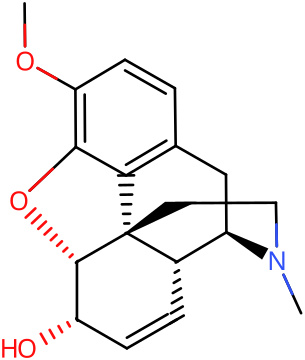
Codeine Stats & Data
COc1ccc2CC3N(C)CCC45C3C=CC(O)C5Oc1c24OROGSEYTTFOCAN-DNJOTXNNSA-NPharmacology
DrugBankDescription
The relief of pain (analgesia) is a primary goal for enhancing the quality of life of patients and for increasing the ability of patients to engage in day to day activities. Codeine, an opioid analgesic, was originally approved in the US in 1950 and is a drug used to decrease pain by increasing the threshold for pain without impairing consciousness or altering other sensory functions. Opiates such as codeine are derived from the poppy plant, _Papaver somniferum_ (Papaveraceae). Codeine is utilized as a central analgesic, sedative, hypnotic, antinociceptive, and antiperistaltic agent, and is also recommended in certain diseases with incessant coughing.LABEL,A175096
Mechanism of Action
Codeine is a selective agonist for the mu opioid receptor, but with a much weaker affinity to this receptor than morphine, a more potent opioid drug. Codeine binds to mu-opioid receptors, which are involved in the transmission of pain throughout the body and central nervous system , . The analgesic properties of codeine are thought to arise from its conversion to Morphine, although the exact mechanism of analgesic action is unknown at this time , .
Pharmacodynamics
**General effects** Codeine is a weak narcotic pain reliever and cough suppressant that is similar to morphine and hydrocodone. A small amount of ingested codeine is converted to morphine in the body. Codeine increases tolerance to pain, reducing existing discomfort. In addition to decreasing pain, codeine also causes sedation, drowsiness, and respiratory depression . **Antitussive activity** This drug has shown antitussive activity in clinical trials and has been effective in cough secondary to tuberculosis and insomnia due to coughing . Codeine suppresses the cough reflex through a direct effect on the cough center in the medulla . **Effects on intestinal motility** Codeine may reduce intestinal motility through both a local and possibly central mechanism of action . This may possibly lead to constipation . The chronic use of opioids, including codeine sulfate, may lead to obstructive bowel disease, particularly in patients with underlying disorders of intestinal motility . **Effects on the central nervous system** Codeine phosphate is an opioid analgesic with uses similar to those of morphine, but is much less potent as an analgesic. Its primary site of action is at the _mu_ opioid receptors distributed throughout the central nervous system. The sedative activities of codeine are less potent than those of morphine .
Metabolism
Approximately 70 to 80% of the ingested dose of codeine is metabolized in the liver by conjugation with glucuronic acid to _codeine-6 glucuronide_ (C6G) and by O-demethylation to _morphine_ (about 5-10%) and N-demethylation to _norcodeine_ (about 10%) respectively. UDP-glucuronosyltransferase (UGT) 2B7 and 2B4 are the major metabolic enzymes mediating the glucurodination of codeine to the metabolite, _codeine 6 glucuronide_. Cytochrome P450 2D6 is the major enzyme responsible for the transformation of codeine to morphine and P450 3A4 is the main enzyme mediating the conversion of codeine to _norcodeine_. Morphine and norcodeine are then further metabolized by conjugation with glucuronic acid. The glucuronide metabolites of morphine are _morphine-3-glucuronide_ (M3G) and_ morphine-6-glucuronide _(M6G). Morphine and M6G have been proven to have analgesic activity in humans. The analgesic activity of C6G in humans is not known at this time. Norcodeine and M3G are generally not considered to have analgesic properties .
Absorption
**Absorption** Codeine is absorbed from the gastrointestinal tract. The maximum plasma concentration occurs 60 minutes after administration . **Food Effects** When 60 mg codeine sulfate was given 30 minutes post-ingestion of a high high-calorie meal, there was no significant change in the absorption of codeine . **Steady-state concentration** The administration of 15 mg codeine sulfate every 4 hours for 5 days lead to steady-state concentrations of codeine, morphine, morphine-3-glucuronide (M3G) and morphine-6-glucuronide (M6G) within 48 hours .
Indication
Codeine sulfate is a form of this drug that is commonly used. It is available in tablet form and indicated for the relief of mild to moderately severe pain, where the use of an opioid analgesic is appropriate . The solution form is used by itself or combined in a syrup with other drugs and is used as a cough suppressant in adults aged 18 and above , .
Half-life
Plasma half-lives of codeine and its metabolites have been reported to be approximately 3 hours .
Elimination
About 90% of the total dose of codeine is excreted by the kidneys. Approximately 10% of the drug excreted by the kidneys is unchanged codeine . The majority of the excretion products can be found in the urine within 6 hours of ingestion, and 40-60 % of the codeine is excreted free or conjugated, approximately 5 to 15 percent as free and conjugated morphine, and approximately 10-20% free and conjugated norcodeine .
Volume of Distribution
Apparent volume of distribution: about 3-6 L/kg, showing an extensive distribution of the drug into tissues .
Clearance
Renal clearance of codeine was 183 +/- 59 ml min-1 in a clinical study . Renal impairment may decrease codeine clearance LABEL.
Receptor Profile
Receptor Actions
Receptor Binding
Measured Affinities
Guide to PHARMACOLOGYMeasured binding and functional data for codeine, curated by the IUPHAR/BPS Guide to PHARMACOLOGY. Each row cites the paper it came from. Lower concentrations mean tighter binding — a value in the sub-nanomolar range indicates a very potent interaction.
| Target | Action | Measure | Value | Concentration | Species | Source |
|---|---|---|---|---|---|---|
| μ receptor OPRM1 | Full agonist | pKi | 6.9 | 125.89 nM | Human | PMID 9686407 |
Reading this. pKi, pEC50 and pIC50 are negative log molar values, so a higher number means a tighter interaction; the concentration column converts them for you. Values from non-human species are laboratory measurements and do not translate directly to human effect. Receptor affinity is not a dose — it describes what a molecule binds, not how much of it is safe to take.
Receptor data from the IUPHAR/BPS Guide to PHARMACOLOGY (v2026.2), licensed CC BY-SA 4.0. Matched to this substance by InChIKey.
History & Culture
Codeine derives its name from the Greek word "kodeia," meaning "poppy head," reflecting its natural occurrence as an alkaloid in the opium poppy (Papaver somniferum). The compound comprises approximately 2% of raw opium, which has been used by humans for millennia. The poppy may have been cultivated as early as 3000 BC by the Sumerians of Mesopotamia, who called opium "gil" (joy) and the plant "hul gil" (plant of joy). Ancient Egyptian records, including the Ebers Papyrus from around 1500 BC, document opium-based remedies, though these preparations were recognized as potentially dangerous due to variable potencies. Codeine was first isolated in 1832 by Pierre Jean Robiquet, a French chemist already renowned for discovering alizarin, the most widespread red dye of the era. Robiquet achieved this isolation while refining morphine extraction processes from opium. The correct molecular composition was determined by Thomas Anderson in 1853, though a complete chemical structure was not proposed until 1925 by J. M. Gulland and Robert Robinson.
Prior to the isolation of individual opium alkaloids, raw opium was widely used in preparations such as laudanum and paregoric elixirs, which were particularly popular in England from the early 18th century. Following codeine's isolation, it found application in various medical contexts including attempts to treat diabetes from the 1880s through the 1950s. For much of the early 20th century, codeine was generally considered non-addictive—a perception that began to shift in the 1930s when researchers like Himmelsbach (1934) examined its physical dependence potential. By 2013, codeine had become the most commonly used opiate worldwide, with approximately 361,000 kg produced and 249,000 kg consumed globally that year. The substance remains on the World Health Organization's List of Essential Medicines for adults, though concerns about efficacy and safety in pediatric populations led WHO to remove it from the list of essential medications for children in March 2011.
1960–present
Recreational misuse of codeine-containing cough syrups first attracted significant attention in the United States during the 1960s and 1970s. Easily accessible over-the-counter preparations were being used recreationally, primarily by teenagers, with the cough syrup colloquially referred to as "Robe." This trend was documented in both popular media—including a 1968 Wall Street Journal article titled "Cough Syrup Kicks"—and academic research examining use among high school and university students. A distinct cultural phenomenon emerged in the early 1990s from the Houston, Texas region: the combination of codeine-promethazine cough syrup with soft drinks and candy, known variously as "lean," "purple drank," or "syrup." This practice originated primarily among young African-Americans in the southern United States and became inextricably linked with the hip-hop music scene. The culture surrounding lean has been both reflected and amplified by artists such as Lil Wayne, whose references brought attention to its effects while often glamorizing its use. The dangers of this practice have been tragically illustrated by deaths within the hip-hop community. Robert Davis Jr, known as DJ Screw, died in 2000, and Chad Butler, known as Pimp C of the group UGK, died in 2007—both deaths attributed in part to codeine-promethazine combinations.
Subjective Effects
Physical
The physical effects of codeine can be broken down into several components which progressively intensify proportional to dosage. The general head space of codeine is described by many as one of intense euphoria, relaxation, anxiety suppression and pain relief.
- Pain relief: This component is subjectively different from other anaesthetics as it does not necessarily remove the pain entirely whilst still remaining equal in terms of its effectiveness. Instead of directly suppressing pain, these substances simply dull the perceived sensation and cover it up with feelings of physical and emotional pleasure.
- Physical euphoria: This particular substance can be considered as less intense in its physical euphoria when compared with that of morphine or diacetylmorphine (heroin) due to the upper limit of how much can be converted into its active form through metabolism. The sensation itself can be described as extreme feelings of hyper intense physical comfort, snuggliness, warmth and physical blissful euphoria which emanates throughout the body.
- Itchiness: This compound presents greater amounts of itchiness due to higher amounts of histamine release in comparison to other opioids.
- Respiratory depression: At low to moderate doses, this effect results in the sensation that the breath is slowed down mildly to moderately, but does not cause noticeable impairment. At high doses and overdoses, opioid-induced respiratory depression can result in a shortness of breath, abnormal breathing patterns, semi-consciousness, or unconsciousness. Severe overdoses can result in a coma or death without immediate medical attention.
- Sedation: At higher dosages, this compound can result in feelings of sedation and is considerably more sedating than that of oxycodone and hydrocodone.
- Constipation
- Cough suppression
- Difficulty urinating
- Pupil constriction
Cognitive
- Cognitive euphoria: This particular substance can be considered as less intense in its cognitive euphoria when compared with that of morphine or diacetylmorphine (heroin) due to the upper limit of how much can be converted into its active form through metabolism. It is still, however, capable of extreme intensity and overwhelming bliss at heavier dosages with a low tolerance. The sensation itself can be described as powerful and overwhelming feeling of emotional bliss, contentment, love and happiness.
- Anxiety suppression
- Compulsive redosing
Forked from Subjective Effect Documentation by Josie Kins, September 2015. Via dose.wiki (CC0).
Codeine has a low toxicity relative to dose. As with all opioids, long-term effects can vary but can include diminished libido, apathy and memory loss. Some people may also have an allergic reaction to codeine, such as the swelling of skin and rashes. It is also potentially lethal when mixed with depressants like alcohol or benzodiazepines. It is strongly recommended that one use harm reduction practices when using this drug.
Carcinogenicity
Codeine
Toxicity (DrugBank)
**Oral LD50**: 427 mg kg-1 (rat) . **Overdose/toxicity** Symptoms of opioid toxicity may include confusion, somnolence, shallow breathing, constricted pupils, nausea, vomiting, constipation and a lack of appetite. In severe cases, symptoms of circulatory and respiratory depression may ensue, which may be life-threatening or fatal , . **Teratogenic effects** This drug is classified as a pregnancy Category C drug. There are no adequate and well-controlled studies completed in pregnant women. Codeine should only be used during pregnancy if the potential benefit outweighs the potential risk of the drug to the fetus . Codeine has shown embryolethal and fetotoxic effects in the hamster, rat as well as mouse models at about 2-4 times the maximum recommended human dose . Maternally toxic doses that were about 7 times the maximum recommended human dose of 360 mg/day, were associated with evidence of bone resorption and incomplete bone ossification. Codeine did not demonstrate evidence of embrytoxicity or fetotoxicity in the rabbit model at doses up to 2 times the maximum recommended human dose of 360 mg/day based on a body surface area comparison . **Nonteratogenic effects** Neonatal codeine withdrawal has been observed in infants born to addicted and non-addicted mothers who ingested codeine-containing medications in the days before delivery.
Effect Profile
Curated + 164 ReportsStrong euphoria, pain relief, and sedation with strong itching/nausea
Tolerance & Pharmacokinetics
drugs.wikiNo tolerance chart. Our decay curves for opioids were estimates, and a curve can make tolerance look longer-lasting than it is, which is the dangerous direction.
Opioid tolerance drops fast when you stop, and even a few days off can be enough, so a dose that used to be normal can now stop your breathing. Overdose deaths rise sharply after prison, detox or leaving treatment, and tolerance also falls during a hospital stay. After any break, start with a much smaller amount, try a test dose first, don't use alone, and keep naloxone within reach. Alcohol, benzodiazepines, gabapentinoids and other sedatives make an opioid overdose much more likely.
Sources: FRANK: heroin · National Harm Reduction Coalition · WHO: opioid overdose · Merrall et al. 2010 · Binswanger et al. 2007 · Strang et al. 2003 · FDA 2019: gabapentinoids and breathing
Cross-Tolerances
Demographics
Gender Distribution
Age Distribution
Reports Over Time
Effect Analysis
Erowid + BluelightEffects aggregated from 152 experience reports (102 single-substance Erowid + 62 Bluelight)
Effect Sentiment Distribution
Confidence Distribution
Each bar is the share of reports mentioning the effect; its whisker, and the band on the rows below, is the 95% interval: where the share could plausibly be with other reports of the same kind.
Positive Effects 47
Adverse Effects 41
Show 21 more adverse effects
Show 25 neutral or unclassified mentions
Also reported in combinations. In the 96 Codeine reports where another drug was taken too, 8 (8.3%) mention hospital, emergency services or an overdose, 0 (0.0%) a seizure and 1 (1.0%) psychosis. In the 102 single-substance reports: 11.8%, 0.0% and 0.0%. These are not in the figures above: they cannot be put down to Codeine alone, and a mention is not always something that happened to the writer.
Dose-Response Correlation
How effect frequency changes across dose levels. Whiskers, and the numbers' hover text, give each figure's 95% interval.
Not drawn, too few reports (a dose tier needs 20): Oral Light (n=12), Oral Strong (n=11). Why 20?
Subjective Effect Ontology
Experience ReportsStructured effect tags extracted from 248 Erowid & Bluelight experience reports using a controlled vocabulary of 220+ canonical effects across 15 domains.
Emotional
Dosage Distribution
Dose distribution from experience reports, one dose per report (the first listed). Doses above Q3 + 3×IQR, far above what people typically take, are left out of the median and range and listed under each route: most are real heavy doses or overdoses, not mistakes.
1 report gave a dose above the typical range (750 mg), so it is not in the figures above. It mentions hospital, emergency services or an overdose. Listing a dose here does not mean it is safe.
Show the report
- 750 mg · mentions hospital, emergency services or an overdose
Real-World Dose Distribution
ErowidFrom 256 of 324 recorded dose entries: those that state a weight (mg, g or µg), in routes with at least five of them. Values above Q3 + 3×IQR, far above what people typically take, are left out; they can include real heavy doses and overdoses, not only mistakes.
Oral (n=247)
Insufflated (n=8)
Common Combinations
Most co-occurring substances, as a share of all 198 reports filed under Codeine; whiskers are 95% intervals
Form / Preparation
Most common forms and preparations, as a share of the 149 reports that give one; whiskers are 95% intervals
Body-Weight Dosing
Dose per kg of body weight, one dose per report (the first listed), from reports giving a weight of 30–250 kg. Doses above Q3 + 3×IQR, far above what people typically take, are left out of the median and range and listed under each route.
2 reports gave a dose above the typical range (9.454–10.274 mg/kg), so they are not in the figures above. 2 of them mention hospital, emergency services or an overdose. Listing a dose here does not mean it is safe.
Show the reports
- 10.274 mg/kg · mentions hospital, emergency services or an overdose
- 9.454 mg/kg · mentions hospital, emergency services or an overdose
Redose Patterns
Redosing behavior across 158 reports
Opioid Equivalence (MME)
NIH HEAL 2024 & CDC 2022Codeine 66.7 mg oral ≈ 10 mg Morphine oral
Legal Status
| Country | Status | Notes |
|---|---|---|
| Australia | Schedule 8 (pure codeine); Schedule 4 (combinations) | Since February 1, 2018, all codeine-containing preparations require a prescription. Pure codeine products are classified as Schedule 8 (Controlled Drug), meaning possession without authority is illegal and subject to the strictest regulation. Prior to this date, lower-dose preparations were available over-the-counter. |
| Bulgaria | OTC available (solid dosage forms) | As of 2015, over-the-counter sale of codeine solid dosage forms is permitted under European Union member state regulations. |
| Canada | Schedule I (with OTC exceptions) | Codeine is a Schedule I controlled substance. However, low-concentration combination products remain available over-the-counter, including formulations containing 8 mg codeine combined with caffeine and paracetamol. |
| Cyprus | OTC available (solid dosage forms) | As of 2015, over-the-counter sale of codeine solid dosage forms is permitted under European Union member state regulations. |
| Denmark | OTC available (solid dosage forms) | As of 2015, over-the-counter sale of codeine solid dosage forms is permitted under European Union member state regulations. |
| Estonia | OTC available (solid dosage forms) | As of 2015, over-the-counter sale of codeine solid dosage forms is permitted under European Union member state regulations. |
| Ireland | Pharmacy-controlled (OTC available) | Codeine can be purchased over-the-counter under pharmacist supervision without prescription. However, no mechanism exists to track patients visiting multiple pharmacies, leading to concerns about potential misuse and addiction. |
| Latvia | OTC available (solid dosage forms) | As of 2015, over-the-counter sale of codeine solid dosage forms is permitted under European Union member state regulations. |
| Lithuania | OTC available (solid dosage forms) | As of 2015, over-the-counter sale of codeine solid dosage forms is permitted under European Union member state regulations. |
| Malta | OTC available (solid dosage forms) | As of 2015, over-the-counter sale of codeine solid dosage forms is permitted under European Union member state regulations. |
| New Zealand | Controlled substance | Regulated under national narcotic control legislation. Specific scheduling varies by formulation and concentration. |
| Poland | OTC available (solid dosage forms) | As of 2015, over-the-counter sale of codeine solid dosage forms is permitted under European Union member state regulations. |
| Romania | OTC available (solid dosage forms) | As of 2015, over-the-counter sale of codeine solid dosage forms is permitted under European Union member state regulations. |
| Slovenia | OTC available (solid dosage forms) | As of 2015, over-the-counter sale of codeine solid dosage forms is permitted under European Union member state regulations. |
| Sweden | Controlled substance | Regulated under national narcotic control laws. Prescription required for codeine-containing products. |
| United Kingdom | Class B | Controlled under the Misuse of Drugs Act. Prescription required for most products, though combination preparations containing less than 12.8 mg codeine per dose are available over-the-counter from pharmacies. |
| United States | Schedule II-V (varies by formulation) | Pure codeine is Schedule II under the Controlled Substances Act. Certain combination formulations are classified as Schedule III or V depending on concentration. Some low-dose polysubstance products are available over-the-counter. |
Harm Reduction
drugs.wiki1) Codeine’s potency is highly variable due to CYP2D6 genetics: ultrarapid metabolizers convert more codeine to morphine and can experience life‑threatening respiratory depression at ‘normal’ doses, while poor metabolizers may feel little effect; start low, avoid dose-stacking, and be especially cautious if you or relatives have had unusual reactions to codeine or tramadol. Breastfeeding parents who are ultrarapid metabolizers have caused fatal infant opioid toxicity; avoid codeine if pregnant or breastfeeding. (NCBI Medical Genetics Summaries – Codeine/CYP2D6.) 2) Schedule V codeine cough syrups are limited to ≤200 mg/100 mL (≤2 mg/mL), and common promethazine/codeine products are 10 mg codeine + 6.25 mg promethazine per 5 mL; translate culture ‘pour’ sizes into milligrams to reduce accidental overdosing: 1 oz (30 mL) ≈ 60 mg codeine; 2 oz ≈ 120 mg; 3 oz ≈ 180 mg. (NCBI Medical Genetics Summaries; Drugs‑Forum community dosing labels; multiple Reddit threads corroborating 10 mg/5 mL.) 3) Promethazine is a strong CNS depressant with anticholinergic and antidopaminergic effects; it adds to opioid sedation and can cause confusion, disorientation, urinary retention, constipation, blurred vision, and (rarely) dystonia or seizures. Its long half‑life (∼10–19 h) means ‘hangover’ drowsiness and impairment can last into the next day—do not drive or operate machinery. (NCBI StatPearls – Promethazine.) 4) Combining any opioid (including codeine) with benzodiazepines, alcohol, gabapentinoids, Z‑drugs, barbiturates, or GHB markedly increases risk of fatal respiratory depression; promethazine further intensifies sedation. If polydrug use has occurred and breathing is slow or shallow, call emergency services and administer naloxone if available—be aware promethazine sedation may persist after naloxone reverses the opioid component. (TripSit combo guidance; DrugWise overdose harm‑reduction.) 5) Avoid stacking additional first‑generation antihistamines (e.g., diphenhydramine/doxylamine): they are also CNS depressants and diphenhydramine inhibits CYP2D6, which can unpredictably blunt euphoria yet increase sedation and risk. (TripSit codeine page.) 6) Some prescriptions are ‘VC’ formulations that include a decongestant (often phenylephrine); these can raise blood pressure and heart rate and are poor candidates for recreational dosing—always read the exact label. (Drugs‑Forum community threads discussing Phenergan VC with Codeine.) 7) Counterfeit or ‘homebrew’ lean may contain unknown opioids, benzodiazepines, or other sedatives; effects can mimic genuine products but potency and contents are unpredictable. Use only clearly labeled pharmacy products; if exposed to unknown syrups, start with very small test doses and avoid any other depressants. (Numerous community reports on Reddit lean forums.) 8) Never inject codeine syrups or attempt to filter for injection: codeine IV can cause pulmonary edema and severe reactions, and syrups contain excipients unsafe for injection. (Erowid Opioid FAQ.) 9) Opioids slow gut motility—constipation, nausea, and urinary retention are common; hydration, fiber, and planned bowel regimens reduce harm. Seek medical help for severe abdominal pain or no bowel movement for several days. 10) People with sleep apnea, chronic lung disease, obesity hypoventilation, or the very young/elderly are at higher risk of respiratory depression; promethazine carries a boxed warning for fatal respiratory depression in children under two—avoid in children and use extreme caution in adolescents. (NCBI StatPearls – Promethazine; NCBI Medical Genetics Summaries – Codeine.)
References
Cited References
Additional references
- NCBI Bookshelf – Codeine Therapy and CYP2D6 Genotype (revised Jan 17, 2025)
- NCBI Bookshelf – Codeine Therapy and CYP2D6 Genotype (PDF excerpt)
- NCBI StatPearls – Promethazine
- TripSit Wiki – Codeine (interactions, CYP2D6 inhibitors)
- TripSit – Drug Combination Chart (general polydrug cautions)
- DrugWise – Overdose (signs, naloxone)
- Erowid – Opioid FAQ (codeine ROA cautions)
- Erowid – Codeine FAQ (onset/peak/duration)
- Drugs‑Forum – Promethazine/codeine typical concentration (user reports)
- Reddit r/homebrewlean – per-bottle mg math confirming 2 mg/mL
- Drugs‑Forum – Phenergan VC with Codeine (phenylephrine in VC formulations)