
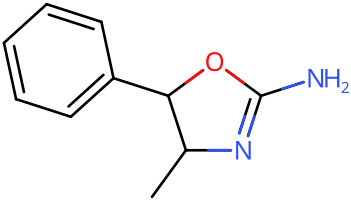
4-METHYLAMINOREX Stats & Data
NC1=NC(C)C(O1)c1ccccc1LJQBMYDFWFGESC-UHFFFAOYSA-NPharmacology
DrugBankTolerance & Pharmacokinetics
drugs.wikiTolerance Decay
Quantitative tolerance kinetics are not formally characterized in humans; estimates reflect typical stimulant patterns and community observations (tolerance builds over multi‑day binges and partially resolves over 1–3 weeks). Avoid consecutive‑day use to reduce bingeing and sleep deprivation.
Cross-Tolerances
Experience Report Analysis
ErowidDemographics
Gender Distribution
Too few reports for a chart: gender is known from 12 reports, and a split is drawn only from 20 reports or more. Counts are shown instead. Why 20?
- Not Specified 1 of 12
- Male 7 of 12
- Female 4 of 12
Age Distribution
Reports Over Time
Effect Analysis
ErowidEffects aggregated from 10 experience reports (10 single-substance Erowid)
Effect Sentiment Distribution
Confidence Distribution
Each bar is the share of reports mentioning the effect; its whisker, and the band on the rows below, is the 95% interval: where the share could plausibly be with other reports of the same kind.
Too few reports for bars: these effects come from 10 single-substance Erowid reports, and a bar is drawn only from 20 reports or more. With fewer, a percentage cannot tell a common effect from a rare one. Counts are shown instead. Why 20?
Positive Effects 3
Adverse Effects 0
Show 1 neutral or unclassified mention
Form / Preparation
Most common forms and preparations, as a share of the 11 reports that give one
Too few reports for bars: these forms come from 11 reports, and a bar is drawn only from 20 reports or more. With fewer, a percentage cannot tell a common effect from a rare one. Counts are shown instead. Why 20?
- Powder / Crystals 11 of 11
Redose Patterns
Redosing behavior across 11 reports
Too few reports for a chart: redosing is known from 11 reports, and a split is drawn only from 20 reports or more. Counts are shown instead. Why 20?
- Single dose 10 of 11
- Redosed 1 of 11
Harm Reduction
drugs.wiki4‑Methylaminorex is active in low milligram doses; use a 0.001 g scale and avoid eyeballing to prevent inadvertent overdose. The drug’s long and variable duration means redosing can cause stacking, markedly prolonging insomnia and cardiovascular strain; spacing doses by many hours and setting a pre‑planned maximum total are protective. Smoking or rapid-onset routes produce strong urges to redose; pre‑measuring total session amounts and keeping ambient temperature cool reduces binge and hyperthermia risk. Aminorex (the parent drug) was linked to pulmonary arterial hypertension (PAH), and a CHEST case series described PAH in people exposed to 4‑methylaminorex; recurrent/high‑dose use may increase PAH risk—seek evaluation for unexplained exertional dyspnea, chest pain, or syncope. MAOIs are contraindicated: combining with sympathomimetic stimulants can precipitate hypertensive crises; do not combine with linezolid, phenelzine, tranylcypromine, selegiline, or moclobemide. Animal studies show convulsions at high doses and robust dopamine release; avoid co‑administration with tramadol or high‑dose bupropion and in those with seizure history. Combining with MDMA/cathinones or other stimulants increases risks of hyperthermia, rhabdomyolysis, arrhythmia, and serotonin toxicity; stay cool, rest, and hydrate modestly (e.g., 250–500 mL/h in heat, not exceeding ~500–750 mL/h for prolonged periods). Due to look‑alike aminorex analogues (e.g., 4,4′‑DMAR) implicated in fatalities and mis‑sold products, use a trusted drug checking service when possible and avoid unknown pressed tablets. Insufflation irritates nasal mucosa; rotate nostrils, use isotonic saline, and allow tissue recovery days. Prolonged wakefulness raises psychosis risk; prioritize sleep after effects subside, using non‑alcoholic, non‑sedative sleep hygiene measures first; seek medical care for chest pain, severe headache, overheating, or confusion.
References
Cited references
- Erowid – 4‑Methylaminorex Basics (dose, onset, duration, MAOI contraindication; PAH caution)
- Erowid – 4‑Methylaminorex Legal Status (stereoisomers and scheduling)
- Drugs‑Forum Wiki – 4‑MAR (dose ranges, ROAs, half‑life note)
- PubMed – Neurochemical effects of an acute treatment with 4‑methylaminorex (convulsant potential; DA release)
- PubMed – Acute neurochemical and behavioral effects of 4‑methylaminorex stereoisomers
- NCBI MedGen – Drug‑ and toxin‑induced pulmonary arterial hypertension (aminorex as cause)
- EUDA/EMCDDA – Joint Report/Risk Assessment on 4,4′‑DMAR (fatalities; hyperthermia risk; mis‑selling)
- DrugBank – 4‑Methylaminorex (identifier DB01447)