
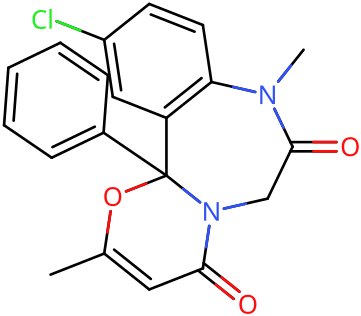
Ketazolam Stats & Data
PWAJCNITSBZRBL-UHFFFAOYSA-NPharmacology
DrugBankDescription
Ketazolam is a benzodiazepine derivative with anxiolytic, anticonvulsant, sedative and skeletal muscle relaxant activity. Ketazolam is not approved in Canada or America.
Mechanism of Action
Benzodiazepines share a similar chemical structure and their effects in humans are mainly produced by the allosteric modification of a specific kind of neurotransmitter receptor, the GABAA receptor, which increases the conductance of this inhibitory channel; this results in the various therapeutic effects as well as adverse effects of benzodiazepines. Binding of benzodiazepines to this receptor complex promotes binding of GABA, which in turn increases the conduction of chloride ions across the neuronal cell membrane. This increased conductance raises the membrane potential of the neuron resulting in inhibition of neuronal firing. In addition, different GABAA receptor subtypes have varying distributions within different regions of the brain and therefore control distinct neuronal circuits. Hence, activation of different GABAA receptor subtypes by benzodiazepines may result in distinct pharmacological actions.
Pharmacodynamics
Benzodiazepines enhance the effect of the neurotransmitter gamma-aminobutyric acid (GABA), which results in sedative, hypnotic, anxiolytic, anticonvulsant, muscle relaxant and amnesic action. Benzodiazepines bind nonspecifically to benzodiazepine receptors which mediate sleep, affects muscle relaxation, anticonvulsant activity, motor coordination, and memory. As benzodiazepine receptors are thought to be coupled to gamma-aminobutyric acid-A (GABAA) receptors, this enhances the effects of GABA by increasing GABA affinity for the GABA receptor. Binding of GABA to the site opens the chloride channel, resulting in a hyperpolarized cell membrane that prevents further excitation of the cell.
Metabolism
Ketazolam is metabolized to diazepam, followed by demoxepam, and finally desmethyldiazepam.
Indication
Ketazolam could be used for the treatment of anxiety. In approved countries, it is indicated for the treatment of anxiety, tension, irritability and similar stress related symptoms.
Elimination
Diazepam and its metabolites are excreted mainly in the urine, predominantly as their glucuronide conjugates.
Benzodiazepines share a similar chemical structure and their effects in humans are mainly produced by the allosteric modification of a specific kind of neurotransmitter receptor, the GABAA receptor, which increases the conductance of this inhibitory channel; this results in the various therapeutic effects as well as adverse effects of benzodiazepines. Binding of benzodiazepines to this receptor complex promotes binding of GABA, which in turn increases the conduction of chloride ions across the neuronal cell membrane.
Carcinogenicity
No indication of carcinogenicity to humans (not listed by IARC).
Toxicity (DrugBank)
Symptoms of overdose include somnolence, confusion, coma, and diminished reflexes. Respiration, pulse and blood pressure should be monitored.
Tolerance & Pharmacokinetics
drugs.wikiNo tolerance chart. Our decay curves for these drugs were estimates, and a curve can make tolerance look longer-lasting than it is, which is the dangerous direction.
How fast tolerance to these drugs fades after a break has not been measured well enough to draw, so don't count on a dose you used to take still being safe: after time off, start with a much smaller amount and don't use alone. Mixing sedatives with each other, with alcohol or with opioids sharply raises the risk of a fatal overdose. If you've been using regularly, don't stop suddenly: withdrawal from benzodiazepines, alcohol or GHB/GBL can cause seizures or delirium, so get medical help to cut down gradually.
Sources: FRANK: benzodiazepines · Alcohol and Drug Foundation: GHB · FDA 2020: benzodiazepine boxed warning · FDA 2019: gabapentinoids and breathing · NHS: alcohol use disorder