
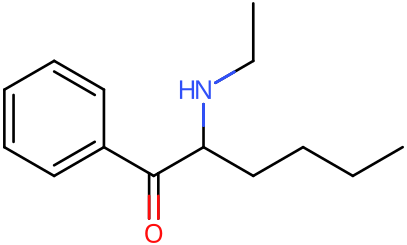
Hexen Stats & Data
CCCCC(NCC)C(=O)c1ccccc1CWNKMHIETKEBCA-UHFFFAOYSA-NInteraction Warnings
Ethyl-Hexedrone can be potentially dangerous in combination with other stimulants as it can increase one's heart rate and blood pressure to dangerous levels.
The neurotoxic effects of MDMA may be increased when combined with amphetamine and other stimulants.
This combination may increase strain on the heart.
Toxicity
PsychonautWikiThe toxicity and long-term health effects of recreational N-ethylhexedrone use do not seem to have been studied in any scientific context and the exact toxic dosage is unknown. This is because N-ethylhexedrone has a very brief history of human usage. Early anecdotal reports from those who have tried N-ethylhexedrone suggests that there do not seem to be any negative health effects attributed to simply trying it at low to moderate doses by itself and using it in a sparing and controlled fashion (but nothing can be completely guaranteed). Some users have reported N-ethylhexedrone to be caustic to the nasal membrane when it is insufflated. A toxicology screening indicated that measured with yeast and SH-SY5Y cells, N-Ethylhexedrone seems to be the most toxic among the five cathionones tested.
Effect Profile
Curated + 7 ReportsModerate stimulation and euphoria with strong anxiety/jitters
Tolerance & Pharmacokinetics
drugs.wikiTolerance Decay
Experience Report Analysis
ErowidDemographics
Gender Distribution
Too few reports for a chart: gender is known from 13 reports, and a split is drawn only from 20 reports or more. Counts are shown instead. Why 20?
- Male 9 of 13
- Female 2 of 13
- Not Specified 2 of 13
Age Distribution
Reports Over Time
Effect Analysis
ErowidEffects aggregated from 7 experience reports (7 single-substance Erowid)
Effect Sentiment Distribution
Confidence Distribution
Each bar is the share of reports mentioning the effect; its whisker, and the band on the rows below, is the 95% interval: where the share could plausibly be with other reports of the same kind.
Too few reports for bars: these effects come from 7 single-substance Erowid reports, and a bar is drawn only from 20 reports or more. With fewer, a percentage cannot tell a common effect from a rare one. Counts are shown instead. Why 20?
Positive Effects 2
Adverse Effects 1
Also reported in combinations. In the 6 Hexen reports where another drug was taken too, 1 mentions hospital, emergency services or an overdose, 1 a seizure and 2 psychosis (too few reports for percentages). In the 7 single-substance reports: 1, 1 and 0. These are not in the figures above: they cannot be put down to Hexen alone, and a mention is not always something that happened to the writer.
Real-World Dose Distribution
ErowidFrom 11 of 14 recorded dose entries: those that state a weight (mg, g or µg), in routes with at least five of them. Values above Q3 + 3×IQR, far above what people typically take, are left out; they can include real heavy doses and overdoses, not only mistakes.
Insufflated (n=11)
Form / Preparation
Most common forms and preparations, as a share of the 11 reports that give one
Too few reports for bars: these forms come from 11 reports, and a bar is drawn only from 20 reports or more. With fewer, a percentage cannot tell a common effect from a rare one. Counts are shown instead. Why 20?
- Powder / Crystals 11 of 11
Redose Patterns
Redosing behavior across 12 reports
Too few reports for a chart: redosing is known from 12 reports, and a split is drawn only from 20 reports or more. Counts are shown instead. Why 20?
- Single dose 6 of 12
- Redosed 6 of 12