
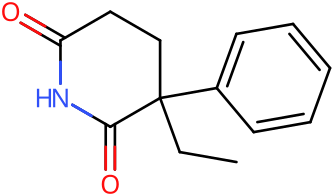
Glutethimide Stats & Data
JMBQKKAJIKAWKF-UHFFFAOYSA-NPharmacology
DrugBankDescription
Glutethimide is a hypnotic and sedative. Its use has been largely superseded by other drugs.
Mechanism of Action
Glutethimide seems to be a GABA agonist which helps induce sedation. It also induces CYP 2D6. When taken with codeine, it enables the body to convert higher amounts of codeine (higher than the average 5 - 10%) to morphine. This combination of effects enhances sedation.
Pharmacodynamics
Glutethimide, like the barbiturates, is a hypnotic sedative. It was introduced in 1954 as a safer alternative to barbiturates but was soon determined to be just as likely to cause addiction and withdrawal symptoms.
Metabolism
Hepatic. Glutethimide is almost completely metabolized.
Indication
For the treatment of insomnia.
Elimination
glutethimide is inactivated by conjugation and the metabolites are excreted in urine, only 2% of the parent substance is excreted in urine, up to 2% of the dose has been reported to be found in the faeces.
Toxicity
DrugBankGlutethimide's overdose picture was notorious even next to the barbiturates it was sold to replace: CNS depression from lethargy to deep coma with intermittent apnoea, plus an anticholinergic poisoning syndrome and hypotension. The coma is famously cyclic — the highly lipophilic drug concentrates in fat and brain and redistributes back into the blood, so patients fluctuate and relapse instead of steadily waking. Toxicity appears at blood levels around 10 mg/L and about 30 mg/L is potentially fatal (the usual hypnotic dose was 250–500 mg). Full neurological recovery from even deep glutethimide coma is possible when oxygenation and circulation are maintained — the deaths are cardiopulmonary. Dependence is barbiturate-type: withdrawal seizures, documented catatonia in case reports, and neonatal withdrawal in maternal addiction.
Toxicity (DrugBank)
In adults, death has been reported after 5 g. The usual lethal dose is 10 to 20g, although survival after a dose of 28 g has been reported.