
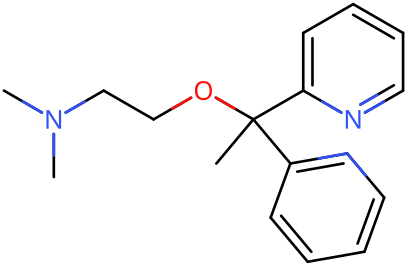
Doxylamine Stats & Data
HCFDWZZGGLSKEP-UHFFFAOYSA-NPharmacology
DrugBankDescription
Histamine H1 antagonist with pronounced sedative properties. It is used in allergies and as an antitussive, antiemetic, and hypnotic. Doxylamine has also been administered in veterinary applications and was formerly used in parkinsonism.
Mechanism of Action
Like other antihistamines, doxylamine acts by competitively inhibiting histamine at H1 receptors. It also has substantial sedative and anticholinergic effects.
Pharmacodynamics
Doxylamine is an antihistamine commonly used as a sleep aid. This drug is also used to relieve symptoms of hay fever (allergic rhinitis), hives (rash or itching), and other allergic reactions. Doxylamine is a member of the ethanolamine class of antihistamines and has anti-allergy power far superior to virtually every other antihistamine on the market, with the exception of diphenhydramine (Benadryl). It is also the most powerful over-the-counter sedative available in the United States, and more sedating than many prescription hypnotics. In a study, it was found to be superior to even the barbiturate, phenobarbital for use as a sedative. Doxylamine is also a potent anticholinergic.
Absorption
Readily absorbed via the gastrointestinal tract.
Indication
Used alone as a short-term sleep aid, in combination with other drugs as a night-time cold and allergy relief drug. Also used in combination with Vitamin B6 (pyridoxine) to prevent morning sickness in pregnant women.
Toxicity associated with antihistamine use is due to overdose following oral ingestion, either unintentional or intentional suicide attempt—most commonly in young and elderly populations. Toxicity from intravenous, intramuscular, or topical routes of administration rarely occurs in the household setting. Major complications of doxylamine toxicity include arrhythmias, respiratory failure, seizures, hyperthermia, rhabdomyolysis, and coma. If the patient experiences toxicity, the healthcare team should continually monitor cardiac activity, and IV access is necessary. Like other antihistamines, doxylamine acts by competitively inhibiting histamine at H1 receptors.
Carcinogenicity
No indication of carcinogenicity to humans (not listed by IARC).
Toxicity (DrugBank)
Signs of overdose include wheezing, tightness in the chest, fever, itching, bad cough, blue skin color, fits, swelling of face, lips, tongue, or throat.
Tolerance & Pharmacokinetics
drugs.wikiTolerance Decay
Cross-Tolerances
Experience Report Analysis
ErowidDemographics
Gender Distribution
Too few reports for a chart: gender is known from 6 reports, and a split is drawn only from 20 reports or more. Counts are shown instead. Why 20?
- Female 1 of 6
- Male 5 of 6
Age Distribution
Reports Over Time
Real-World Dose Distribution
ErowidFrom 13 of 16 recorded dose entries: those that state a weight (mg, g or µg), in routes with at least five of them. Values above Q3 + 3×IQR, far above what people typically take, are left out; they can include real heavy doses and overdoses, not only mistakes.
Oral (n=12)
Form / Preparation
Most common forms and preparations, as a share of the 5 reports that give one
Too few reports for bars: these forms come from 5 reports, and a bar is drawn only from 20 reports or more. With fewer, a percentage cannot tell a common effect from a rare one. Counts are shown instead. Why 20?
- Pill / Tablet 2 of 5