
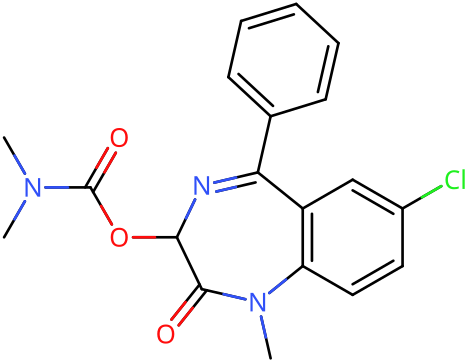
Camazepam Stats & Data
CN(C)C(=O)OC1N=C(c2ccccc2)c2cc(Cl)ccc2N(C)C1=OPXBVEXGRHZFEOF-UHFFFAOYSA-NPharmacology
DrugBankDescription
Camazepam is a benzodiazepine which is a dimethyl carbamate ester of tamzepam, a metabolite of diazepam. Similarly to other drugs in its class, it has antxiolytic, anticonvulsant, hypnotic, and skeletal muscle relaxant properties. However, unlike other benzodiapeines camazepam is predominantly anxiolytic and is relatively weak as an anticonvulsant, hypnotic and skeletal muscle relaxant. Camazepam also has less side effects, such as impaired cognition and reaction times, compared to other benzodiazepines. However, impairment of cognition and disrupted sleep patterns will occur at doses higher than 40mg of carazepam. Camazepam is also believed to increase attention, and is associated with skin disorders. In the United States camazepam is regulated as a Schedule IV controlled substance.
Mechanism of Action
Camazepam has been shown to bind competitively to benzodiazepine receptors in the brain with a relatively low affinity in animal models. This binding of benzodiazepine receptors by camazepam and its active metabolites is responsible for its anticonvulsant effects. Notably, only three metabolites were shown to exert anticonvulsant activity, temazepam, oxazepam, and hydroxy camazepam. The anxiolytic properties of camazepam are also attributed to their ability to bind benzodiazepine receptors, also known as GABA receptors. When benzodiazepines bind to GABA receptors they increase the efficiency with which the inhibitory neurotransmitter GABA binds.
Metabolism
Metabolized by the liver into more than 10 metabolites, some of which are also active and posses anticonvulsant properties. One active metabolite of note is temazepam which has roughly equal in effectiveness as an anxiolytic, but is less anticonvulsant, sedating, and motor-impairing. Camazepam undergoes enantioselective metabolism by human liver microsomes.
Absorption
Almost completely absorbed into the bloodstream after oral administration. 90% bioavailability can be achieved in humans.
Indication
Camazepam has been used in placebo controlled studies for the treatment of patients suffering from anxiety and depression.
Elimination
Renally eliminated.
Toxicity
PubChemCamazepam has been shown to bind competitively to benzodiazepine receptors in the brain with a relatively low affinity in animal models. This binding of benzodiazepine receptors by camazepam and its active metabolites is responsible for its anticonvulsant effects.
Carcinogenicity
No indication of carcinogenicity to humans (not listed by IARC).
Effect Profile
CuratedStrong euphoria with low anxiolysis, sedation, and cognitive impairment
Tolerance & Pharmacokinetics
drugs.wikiNo tolerance chart. Our decay curves for these drugs were estimates, and a curve can make tolerance look longer-lasting than it is, which is the dangerous direction.
How fast tolerance to these drugs fades after a break has not been measured well enough to draw, so don't count on a dose you used to take still being safe: after time off, start with a much smaller amount and don't use alone. Mixing sedatives with each other, with alcohol or with opioids sharply raises the risk of a fatal overdose. If you've been using regularly, don't stop suddenly: withdrawal from benzodiazepines, alcohol or GHB/GBL can cause seizures or delirium, so get medical help to cut down gradually.
Sources: FRANK: benzodiazepines · Alcohol and Drug Foundation: GHB · FDA 2020: benzodiazepine boxed warning · FDA 2019: gabapentinoids and breathing · NHS: alcohol use disorder