
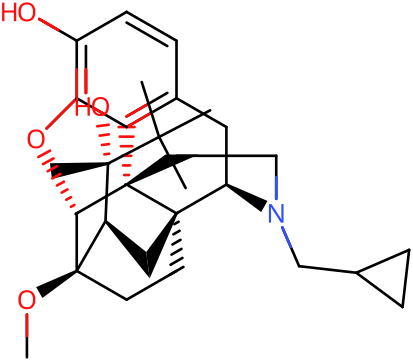
Buprenorphine Stats & Data
COC12CCC3(CC1C(C)(O)C(C)(C)C)C1Cc4ccc(O)c5OC2C3(CCN1CC1CC1)c45RMRJXGBAOAMLHD-IHFGGWKQSA-NPharmacology
DrugBankDescription
Buprenorphine is a weak partial mu-opioid receptor agonist and a weak kappa-opioid receptor antagonist used for the treatment of severe pain. It is also commonly used as an alternative to methadone for the treatment of severe opioid addiction. Buprenorphine is commercially available as the brand name product Suboxone which is formulated in a 4:1 fixed-dose combination product along with naloxone, a non-selective competitive opioid receptor antagonist. Combination with naloxone is intended to reduce the abuse potential of Suboxone, as naloxone is poorly absorbed by the oral route (and has no effect when taken orally), but would reverse the opioid agonist effects of buprenorphine if injected intravenously. Buprenorphine has poor gastrointestinal absorption and is therefore formulated as a sublingual tablet. Buprenorphine has a number of unique pharmacokinetic and pharmacodynamic properties that make it a preferred agent for the treatment of conditions requiring high doses of strong opioids. For example, buprenorphine dissociates from opioid receptors very slowly, resulting in a long duration of action and relief from pain or withdrawal symptoms for upwards of 24-36 hours. Use of once-daily buprenorphine may benefit individuals who have developed tolerance to other potent opioids and who require larger and more frequent doses.
Mechanism of Action
Buprenorphine is a partial agonist at the mu-opioid receptor and an antagonist at the kappa-opioid receptor. It demonstrates a high affinity for the mu-opioid receptor but has lower intrinsic activity compared to other full mu-opioid agonists such as heroin, oxycodone, or methadone. This means that buprenorphine preferentially binds the opioid receptor and displaces lower affinity opioids without activating the receptor to a comparable degree. Clinically, this results in a slow onset of action and a clinical phenomenon known as the "ceiling effect" where once a certain dose is reached buprenorphine's effects plateau. This effect can be beneficial, however, as dose-related side effects such as respiratory depression, sedation, and intoxication also plateau at around 32mg, resulting in a lower risk of overdose compared to methadone and other full agonist opioids. It also means that opioid-dependent patients do not experience sedation or euphoria at the same rate that they might experience with more potent opioids, improving quality of life for patients with severe pain and reducing the reinforcing effects of opioids which can lead to drug-seeking behaviours.
Pharmacodynamics
Buprenorphine interacts predominately with the opioid mu-receptor. These mu-binding sites are discretely distributed in the human brain, spinal cord, and other tissues. In clinical settings, buprenorphine exerts its principal pharmacologic effects on the central nervous system. Its primary actions of therapeutic value are analgesia and sedation. In addition to analgesia, alterations in mood, euphoria and dysphoria, and drowsiness commonly occur. Buprenorphine depresses the respiratory centers, depresses the cough reflex, and constricts the pupils. **Dependence** Buprenorphine is a partial agonist at the mu-opioid receptor and chronic administration produces physical dependence of the opioid type, characterized by withdrawal signs and symptoms upon abrupt discontinuation or rapid taper. The withdrawal syndrome is typically milder than seen with full agonists and may be delayed in onset. Buprenorphine can be abused in a manner similar to other opioids. This should be considered when prescribing or dispensing buprenorphine in situations when the clinician is concerned about an increased risk of misuse, abuse, or diversion. **Withdrawal** Abrupt discontinuation of treatment is not recommended as it may result in an opioid withdrawal syndrome that may be delayed in onset.
Metabolism
Buprenorphine is metabolized to norbuprenorphine via Cytochrome P450 3A4/3A5-mediated N-dealkylation. Buprenorphine and norbuprenorphine both also undergo glucuronidation to the inactive metabolites buprenorphine-3-glucuronide and norbuprenorphine-3-glucuronide, respectively. While norbuprenorphine has been found to bind to opioid receptors in-vitro, brain concentrations are very low which suggests that it does not contribute to the clinical effects of buprenorphine. Naloxone undergoes direct glucuronidation to naloxone-3-glucuronide as well as N-dealkylation, and reduction of the 6-oxo group.
Absorption
Bioavailablity of buprenorphine/naloxone is very high following intravenous or subcutaneous administration, lower by the sublingual or buccal route, and very low when administered by the oral route. It is therefore provided as a sublingual tablet that is absorbed from the oral mucosa directly into systemic circulation. Clinical pharmacokinetic studies found that there was wide inter-patient variability in the sublingual absorption of buprenorphine and naloxone, but within subjects the variability was low. Both Cmax and AUC of buprenorphine increased in a linear fashion with the increase in dose (in the range of 4 to 16 mg), although the increase was not directly dose-proportional. Buprenorphine combination with naloxone (2mg/0.5mg) provided in sublingual tablets demonstrated a Cmax of 0.780 ng/mL with a Tmax of 1.50 hr and AUC of 7.651 ng.hr/mL. Coadministration with naloxone does not effect the pharmacokinetics of buprenorphine.
Indication
Buprenorphine is indicated for the management of pain severe enough to require an opioid analgesic and for which alternative treatments are inadequate. Buprenorphine is also used in combination with naloxone in a fixed-dose combination product for the treatment of moderate to severe opioid use disorder.
Half-life
Buprenorphine demonstrates slow dissociation kinetics (~166 min), which contributes to its long duration of action and allows for once-daily or even every-second-day dosing. In clinical trial studies, the half-life of sublingually administered buprenorphine/naloxone 2mg/0.5mg was found to be 30.75 hours.
Protein Binding
Buprenorphine is approximately 96% protein-bound, primarily to alpha- and beta-globulin.
Elimination
Buprenorphine, like morphine and other phenolic opioid analgesics, is metabolized by the liver and its clearance is related to hepatic blood flow. It is primarily eliminated via feces (as free forms of buprenorphine and norbuprenorphine) while 10 - 30% of the dose is excreted in urine (as conjugated forms of buprenorphine and norbuprenorphine). The overall mean elimination half-life of buprenorphine in plasma ranges from 31 to 42 hours, although the levels are very low 10 hours after dosing (majority of AUC of buprenorphine is captured within 10 hours), indicating that the effective half-life may be shorter.
Volume of Distribution
Buprenorphine is highly lipophilic, and therefore extensively distributed, with rapid penetration through the blood-brain barrier. The estimated volume of distribution is 188 - 335 L when given intravenously. It is able to cross into the placenta and breast milk.
Clearance
Clearance may be higher in children than in adults. Plasma clearance rate, IV administration, anaesthetized patients = 901.2 ± 39.7 mL/min; Plasma clearance rate, IV administration, healthy subjects = 1042 - 1280 mL/min.
Receptor Profile
Receptor Actions
Receptor Binding
Measured Affinities
Guide to PHARMACOLOGYMeasured binding and functional data for buprenorphine, curated by the IUPHAR/BPS Guide to PHARMACOLOGY. Each row cites the paper it came from. Lower concentrations mean tighter binding — a value in the sub-nanomolar range indicates a very potent interaction.
| Target | Action | Measure | Value | Concentration | Species | Source |
|---|---|---|---|---|---|---|
| μ receptor OPRM1 | Partial agonist | pKi | 8.8 | 1.58 nM | Human | PMID 9686407 |
| κ receptor OPRK1 | Antagonist | pKi | — | — | Human | — |
Reading this. pKi, pEC50 and pIC50 are negative log molar values, so a higher number means a tighter interaction; the concentration column converts them for you. Values from non-human species are laboratory measurements and do not translate directly to human effect. Receptor affinity is not a dose — it describes what a molecule binds, not how much of it is safe to take.
Receptor data from the IUPHAR/BPS Guide to PHARMACOLOGY (v2026.2), licensed CC BY-SA 4.0. Matched to this substance by InChIKey.
History & Culture
1959–1985
Buprenorphine emerged from a decade-long research program at Reckitt & Colman (now Reckitt Benckiser) in Hull, England, where scientists sought to synthesize opioid compounds that retained therapeutic analgesic properties while minimizing the problematic effects of physical dependence and abuse liability. The compound was discovered in 1966 and designated RX6029 after demonstrating success in reducing dependence in animal models. It was patented in 1965 and entered human clinical trials in 1971. The medication was first launched commercially in the United Kingdom in 1978 as an injectable formulation for the treatment of severe pain, followed by a sublingual tablet preparation in 1982. In the United States, Reckitt licensed Norwich-Eaton to distribute the injectable formulation under the brand name Buprenex, which received FDA approval and was launched in 1985. By that year, injectable buprenorphine had been marketed for analgesic purposes in 29 countries and the sublingual tablet in 16 countries.
1975–1981
The investigation of buprenorphine as a potential treatment for opioid addiction began in 1975, when researcher Donald Jasinski at the Lexington Addiction Research Center identified the compound as having especially unique pharmacology in humans. His research demonstrated that buprenorphine produced very little physical dependence even with chronic administration, leading him to speculate that it could serve both as an analgesic with low abuse potential and as a novel treatment for opioid addiction. Jasinski characterized buprenorphine as producing long-lasting changes in subjective experience that were acceptable to individuals with opioid addiction while being less toxic than methadone. He concluded that the compound appeared to combine the advantages of both methadone and the opioid antagonist naltrexone without the major disadvantages of either. In 1979, the Addiction Research Center's clinical research program relocated from Lexington to the Johns Hopkins University medical campus in Baltimore, with the preclinical program following in 1981. The Baltimore location was selected in part because it provided access to a population of inner-city heroin users who could serve as research subjects.
2000–2021
Prior to buprenorphine's approval for addiction treatment in the United States, the Drug Addiction Treatment Act of 2000 was enacted following lobbying efforts by Reckitt Benckiser. This legislation granted the Secretary of Health and Human Services authority to issue waivers allowing physicians with appropriate training to prescribe Schedule III through V controlled substances for the treatment of addiction outside of specialized clinic settings, which had previously been the only permitted location for such treatment. The FDA approved buprenorphine and the buprenorphine-naloxone combination product for opioid use disorder in October 2002. Immediately prior to this approval, the DEA rescheduled buprenorphine from Schedule V to Schedule III. The waiver system initially limited each approved physician to treating only 10 patients. This cap was raised to 30, then to 100 in May 2008, and subsequently to 275 patients in 2016 under the Obama administration. In January 2021, responding to record levels of opioid overdose deaths, the Department of Health and Human Services eliminated the waiver requirement entirely for physicians prescribing buprenorphine to up to 30 patients concurrently.
1995–2010
France adopted a notably different regulatory approach, permitting general practitioners to prescribe buprenorphine for opioid use disorder beginning in the mid-1990s without requiring special training or restrictions. This policy was implemented as a harm reduction response to HIV transmission and overdose mortality among people who inject drugs. The result was treatment of approximately ten times more patients per year with buprenorphine than with methadone in the following decade. Between 1994 and 2002, deaths from heroin overdose in France decreased by approximately 80 percent, and the incidence of AIDS among people who inject drugs fell from 25 percent in the mid-1990s to 6 percent by 2010. In the European Union more broadly, the high-dose sublingual tablet preparations Subutex and Suboxone received approval for opioid use disorder treatment in September 2006. Extended-release injectable formulations have since been approved in multiple jurisdictions, including Buvidal in the United Kingdom, Europe, and Australia in 2018, and Sublocade in the United States the same year.
Buprenorphine has a low toxicity relative to dose: the ceiling dose for buprenorphine is usually between 16mg and 32mg, and anything above this will not produce an increase in respiratory depression (the primary cause of death in opioid overdose is severe respiratory depression, leading to respiratory collapse). Thus increasing the dose of buprenorphine above this level will not continue to increase risk of death in a fashion similar to other μ-opioid receptor agonists. As with all opioids, long-term effects can vary but can include diminished libido, apathy and memory loss. Regardless of the ceiling dose, an important distinction has to be made in the dose used in opioid naive individuals and opioid experienced individuals.
Carcinogenicity
No indication of carcinogenicity to humans (not listed by IARC).
Toxicity (DrugBank)
Manifestations of acute overdose include pinpoint pupils, sedation, hypotension, respiratory depression and death.
Tolerance & Pharmacokinetics
drugs.wikiNo tolerance chart. Our decay curves for opioids were estimates, and a curve can make tolerance look longer-lasting than it is, which is the dangerous direction.
Opioid tolerance drops fast when you stop, and even a few days off can be enough, so a dose that used to be normal can now stop your breathing. Overdose deaths rise sharply after prison, detox or leaving treatment, and tolerance also falls during a hospital stay. After any break, start with a much smaller amount, try a test dose first, don't use alone, and keep naloxone within reach. Alcohol, benzodiazepines, gabapentinoids and other sedatives make an opioid overdose much more likely.
Sources: FRANK: heroin · National Harm Reduction Coalition · WHO: opioid overdose · Merrall et al. 2010 · Binswanger et al. 2007 · Strang et al. 2003 · FDA 2019: gabapentinoids and breathing
Cross-Tolerances
Demographics
Gender Distribution
Age Distribution
Reports Over Time
Effect Analysis
Erowid + BluelightEffects aggregated from 97 experience reports (71 single-substance Erowid + 26 Bluelight)
Effect Sentiment Distribution
Confidence Distribution
Each bar is the share of reports mentioning the effect; its whisker, and the band on the rows below, is the 95% interval: where the share could plausibly be with other reports of the same kind.
Positive Effects 31
Adverse Effects 34
Show 14 more adverse effects
Show 17 neutral or unclassified mentions
Also reported in combinations. In the 81 Buprenorphine reports where another drug was taken too, 16 (19.8%) mention hospital, emergency services or an overdose, 2 (2.5%) a seizure and 2 (2.5%) psychosis. In the 71 single-substance reports: 15.5%, 1.4% and 0.0%. These are not in the figures above: they cannot be put down to Buprenorphine alone, and a mention is not always something that happened to the writer.
Dose-Response Correlation
How effect frequency changes across dose levels. Whiskers, and the numbers' hover text, give each figure's 95% interval.
Not drawn, too few reports (a dose tier needs 20): Sublingual Common (n=10), Sublingual Heavy (n=14). Why 20?
Dosage Distribution
Dose distribution from experience reports, one dose per report (the first listed). Doses above Q3 + 3×IQR, far above what people typically take, are left out of the median and range and listed under each route: most are real heavy doses or overdoses, not mistakes.
Oral
Sublingual
1 report gave a dose above the typical range (24 mg), so it is not in the figures above. Listing a dose here does not mean it is safe.
Show the report
- 24 mg · another drug taken too
Real-World Dose Distribution
ErowidFrom 188 of 212 recorded dose entries: those that state a weight (mg, g or µg), in routes with at least five of them. Values above Q3 + 3×IQR, far above what people typically take, are left out; they can include real heavy doses and overdoses, not only mistakes.
Oral (n=30)
Sublingual (n=111)
Insufflated (n=22)
Intravenous (n=15)
Common Combinations
Most co-occurring substances, as a share of all 152 reports filed under Buprenorphine; whiskers are 95% intervals
Form / Preparation
Most common forms and preparations, as a share of the 64 reports that give one; whiskers are 95% intervals
Body-Weight Dosing
Dose per kg of body weight, one dose per report (the first listed), from reports giving a weight of 30–250 kg. Doses above Q3 + 3×IQR, far above what people typically take, are left out of the median and range and listed under each route.
Oral
Sublingual
2 reports gave a dose above the typical range (0.336–0.378 mg/kg), so they are not in the figures above. Listing a dose here does not mean it is safe.
Show the reports
- 0.378 mg/kg · another drug taken too
- 0.336 mg/kg · another drug taken too
Insufflated
Unknown
Redose Patterns
Redosing behavior across 116 reports
Opioid Equivalence (MME)
NIH HEAL 2024 & CDC 2022Buprenorphine ~0.26 mg sublingual ≈ 10 mg Morphine oral
Legal Status
| Country | Status | Notes |
|---|---|---|
| Austria | Prescription medicine / SMG controlled | Legal for medical use under the Arzneimittelgesetz (AMG). Possession or sale without a valid prescription is prohibited under the Suchtmittelgesetz (SMG). Available as Temgesic for pain and Subutex for opioid addiction treatment. |
| Canada | Schedule I (CDSA) | Controlled under the Controlled Drugs and Substances Act. Only available with a valid prescription from a licensed practitioner. |
| Croatia | Prescription only | Available by prescription only as Subutex in 2 mg tablet form for opioid addiction treatment. While pharmacies stock the medication, prescriptions may only be written by approved addiction treatment physicians. |
| Finland | Prescription controlled | Available by prescription as Temgesic for pain management, which can be obtained from pharmacies. Subutex for opioid addiction treatment must be dispensed through approved addiction treatment physicians rather than regular pharmacies. |
| France | Prescription medicine | Prescription by general practitioners and dispensation by pharmacies has been permitted since the mid-1990s as part of harm reduction efforts addressing HIV transmission and overdose risk among people who use drugs. |
| Germany | Anlage III BtMG | Controlled under the Betäubungsmittelgesetz (Narcotics Act, Schedule III) since September 1, 1984. Requires a special narcotic prescription form (Betäubungsmittelrezept). Available as Temgesic for pain management and Subutex for opioid addiction treatment. |
| Netherlands | List II (Opiumwet) | Controlled under List II of the Opium Law with special rules governing prescription and dispensation. Available by prescription as Temgesic in 0.2 mg sublingual tablets for severe pain, and by injection in hospital settings. |
| Norway | Class A | Classified as a Class A controlled substance under Norwegian drug legislation. Available as Temgesic (0.3 mg) for pain relief and Subutex and Suboxone (8 mg formulations) for opioid addiction treatment. |
| Russia | Schedule II | Controlled as a Schedule II substance under Russian narcotics legislation. Subject to strict prescription and distribution controls. |
| Sweden | Schedule IV narcotic | Classified as a Class IV controlled substance. Available as Temgesic (0.2 and 0.4 mg sublingual tablets, 0.3 mg/ml injection) and Subutex (0.4, 2, and 8 mg sublingual tablets). While any physician may technically prescribe Subutex, official guidance recommends that only practitioners at drug treatment centers prescribe it for addiction. |
| Switzerland | Verzeichnis A | Listed as a controlled substance under Verzeichnis A of the Swiss narcotics regulations. Medicinal use is permitted under appropriate medical supervision. |
| Turkey | Restricted prescription | Available only as part of official addiction treatment programs. Requires a prescription from a physician working at an addiction clinic, must be purchased from a major hospital, and the patient must demonstrate absence of other opioid use via urine screening. Available as buprenorphine/naloxone combination preparations in 2 mg/0.5 mg and 8 mg/2 mg formulations. |
| United Kingdom | Schedule 3, Class C | Controlled under the Misuse of Drugs Act 1971. Requires a prescription or license for lawful possession. A Home Office license is required for export. Commonly prescribed for treatment of heroin, methadone, or other severe opioid dependence. |
| United States | Schedule III | Rescheduled by the DEA from Schedule V to Schedule III in 2002, just prior to FDA approval for opioid use disorder treatment. The Drug Addiction Treatment Act of 2000 established a waiver system allowing qualified physicians to prescribe buprenorphine for addiction treatment outside specialized clinics. Prescriber patient limits were progressively increased from 10 to 30, then 100, and eventually 275 patients. As of January 2021, the waiver requirement was eliminated for prescribing to up to 30 patients concurrently. |
Harm Reduction
drugs.wikiInduction timing is crucial: to avoid precipitated withdrawal, begin sublingual buprenorphine only once clear withdrawal is present—typically ≥12 hours after short‑acting opioids, ≥24–48 hours after long‑acting opioids; for methadone, taper to ≤30 mg/day and wait 24–48+ hours. During fentanyl patch therapy, a longer wait (48–72 h after removal) is advised. Alternative initiation strategies exist (e.g., low‑dose ‘micro‑induction’ while continuing a full agonist) when standard induction is not tolerated; these should be clinician‑directed. Combination products with naloxone have negligible naloxone effect when used sublingually/buccally as directed but can precipitate severe withdrawal if the product is dissolved and injected. Buprenorphine’s high receptor affinity can block other opioids for 24–72 hours; attempts to ‘break through’ with more opioids increase overdose risk, especially as buprenorphine levels decline. Sedative co‑use (benzodiazepines, alcohol, Z‑drugs, other depressants) greatly magnifies respiratory depression risk; treatment should not be withheld solely for benzodiazepine co‑use, but dosing and monitoring must be cautious. Proper sublingual technique improves effect and reduces redosing: let the film/tablet fully dissolve (often 3–10 minutes), avoid eating/drinking/smoking for ~30 minutes, and wait ≥2 hours before any reassessment dose. Transdermal patches are for analgesia in opioid‑tolerant patients; do not cut, chew, heat, or extract—misuse can cause uncontrolled release and fatal overdose. Accidental pediatric exposures (films, tablets, patches) can be lethal from a single dose; store locked and dispose securely. Hepatic impairment raises risk of toxicity; monitor liver enzymes periodically and avoid combination product in severe hepatic dysfunction. In buprenorphine overdose, reversal may require higher or repeated naloxone dosing and prolonged supportive care due to buprenorphine’s high affinity and long half‑life.
References
Data Sources
Cited References
Additional references
- DrugBank: Buprenorphine (DB00921)
- NCBI TIP 63, Chapter 3D: Buprenorphine (Medications for Opioid Use Disorder)
- NCBI TIP 63 Home Dosing Schedule (patient handout)
- StatPearls: Buprenorphine (NBK459126)
- StatPearls: Buprenorphine (article-18708)
- StatPearls: Buprenorphine and Naloxone (NBK603725)
- NCBI: Pharmacology of medicines for opioid dependence (WHO Guidelines)
- NCBI: Drug interactions involving methadone and buprenorphine (WHO Guidelines)
- NCBI: Buprenorphine for Chronic Pain – Clinical Effectiveness Review
- StatPearls: Opioid Toxicity (naloxone reversal considerations)
- Erowid Buprenorphine Vault (general context)
- EUDA Best Practice: Opioid substitution treatment evidence (mortality/retention)