
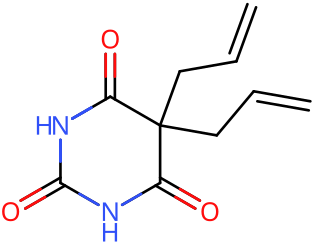
Allobarbital Stats & Data
FDQGNLOWMMVRQL-UHFFFAOYSA-NTolerance & Pharmacokinetics
drugs.wikiNo tolerance chart. Our decay curves for these drugs were estimates, and a curve can make tolerance look longer-lasting than it is, which is the dangerous direction.
How fast tolerance to these drugs fades after a break has not been measured well enough to draw, so don't count on a dose you used to take still being safe: after time off, start with a much smaller amount and don't use alone. Mixing sedatives with each other, with alcohol or with opioids sharply raises the risk of a fatal overdose. If you've been using regularly, don't stop suddenly: withdrawal from benzodiazepines, alcohol or GHB/GBL can cause seizures or delirium, so get medical help to cut down gradually. With barbiturates, you get used to the effects much more than to a dangerous dose, so the gap between a dose that works and one that kills shrinks the more you use. Stopping suddenly after regular use can cause convulsions and delirium.
Sources: FRANK: benzodiazepines · Alcohol and Drug Foundation: GHB · FDA 2020: benzodiazepine boxed warning · FDA 2019: gabapentinoids and breathing · NHS: alcohol use disorder · Phenobarbital label: drug abuse and dependence