
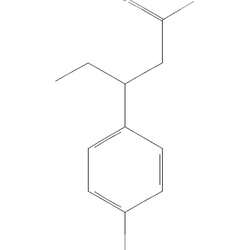
4-Fluorophenibut Stats & Data
QWHXHLDNSXLAPX-UHFFFAOYSA-NPharmacology
DrugBankMechanism of Action
F-phenibut acts as a potent agonist of the GABA-B receptor and in this regard is more similar to baclofen than phenibut.
History & Culture
F-Phenibut, designated by the developmental code name CGP-11130, is a GABA analogue that was investigated as a potential pharmaceutical agent but was never marketed. The compound belongs to a family of phenyl-substituted GABA derivatives that includes baclofen, tolibut, and phenibut, all of which share structural similarities as beta-phenyl-GABA analogues. Despite its origins in pharmaceutical research, F-Phenibut has more recently emerged as a novel psychoactive substance available through online research chemical vendors. The compound remains poorly characterized in the scientific literature, with limited formal research conducted on its pharmacological and toxicological properties.
Toxicity
PsychonautWikiF-Phenibut likely has a low toxicity relative to dose. However, it is potentially lethal when mixed with depressants like alcohol, benzodiazepines or opioids. The toxicity and long-term health effects of recreational F-Phenibut use do not seem to have been studied in any scientific context and the exact toxic dosage is unknown. This is because F-Phenibut has very little history of human usage. Anecdotal evidence from people who have tried this substance within the community suggests that there do not seem to be any negative health effects attributed to simply trying this substance at low to moderate doses by itself and using it sparingly (but nothing can be completely guaranteed).
Tolerance & Pharmacokinetics
drugs.wikiNo tolerance chart. Our decay curves for these drugs were estimates, and a curve can make tolerance look longer-lasting than it is, which is the dangerous direction.
How fast tolerance to these drugs fades after a break has not been measured well enough to draw, so don't count on a dose you used to take still being safe: after time off, start with a much smaller amount and don't use alone. Mixing sedatives with each other, with alcohol or with opioids sharply raises the risk of a fatal overdose. If you've been using regularly, don't stop suddenly: withdrawal from benzodiazepines, alcohol or GHB/GBL can cause seizures or delirium, so get medical help to cut down gradually.
Sources: FRANK: benzodiazepines · Alcohol and Drug Foundation: GHB · FDA 2020: benzodiazepine boxed warning · FDA 2019: gabapentinoids and breathing · NHS: alcohol use disorder
Cross-Tolerances
Experience Report Analysis
ErowidDemographics
Gender Distribution
Too few reports for a chart: gender is known from 7 reports, and a split is drawn only from 20 reports or more. Counts are shown instead. Why 20?
- Male 7 of 7
Age Distribution
Reports Over Time
Effect Analysis
ErowidEffects aggregated from 4 experience reports (4 single-substance Erowid)
Effect Sentiment Distribution
Confidence Distribution
Each bar is the share of reports mentioning the effect; its whisker, and the band on the rows below, is the 95% interval: where the share could plausibly be with other reports of the same kind.
Too few reports for bars: these effects come from 4 single-substance Erowid reports, and a bar is drawn only from 20 reports or more. With fewer, a percentage cannot tell a common effect from a rare one. Counts are shown instead. Why 20?
Positive Effects 1
Adverse Effects 0
Also reported in combinations. In the 3 4-Fluorophenibut reports where another drug was taken too, 1 mentions hospital, emergency services or an overdose, 0 a seizure and 0 psychosis (too few reports for percentages). In the 4 single-substance reports: 0, 0 and 0. These are not in the figures above: they cannot be put down to 4-Fluorophenibut alone, and a mention is not always something that happened to the writer.
Real-World Dose Distribution
ErowidFrom 137 of 138 recorded dose entries: those that state a weight (mg, g or µg), in routes with at least five of them. Values above Q3 + 3×IQR, far above what people typically take, are left out; they can include real heavy doses and overdoses, not only mistakes.
Oral (n=27)
Rectal (n=110)
Form / Preparation
Most common forms and preparations, as a share of the 4 reports that give one
Too few reports for bars: these forms come from 4 reports, and a bar is drawn only from 20 reports or more. With fewer, a percentage cannot tell a common effect from a rare one. Counts are shown instead. Why 20?
- Powder / Crystals 2 of 4
Legal Status
| Country | Status | Notes |
|---|---|---|
| Germany | Not controlled | Not scheduled under the Betäubungsmittelgesetz (BtMG). However, sale for human consumption would be regulated under §2 of the Arzneimittelgesetz (Medicines Act). Generally legal when sold as a research chemical or not marketed for consumption. |
| Switzerland | Not controlled | Not listed under Buchstabe A, B, C, or D of the controlled substances regulations. Currently considered legal, though this status may be subject to change. |
| United Kingdom | Potentially illegal (PSA 2016) | May be prohibited under the Psychoactive Substances Act 2016, which broadly restricts the production, supply, and importation of psychoactive substances. The Act provides exemptions for alcohol, nicotine, caffeine, and licensed medicinal products, but F-Phenibut does not fall under these exemptions. |
Harm Reduction
drugs.wikiPotency vs phenibut is highly variable across individuals and lots; community moderators and experienced users typically estimate 4–8× stronger by weight, with reports spanning roughly 2–10×. Given this spread, first-time doses should be conservative (≤100 mg oral) with no redose for at least 3 hours to avoid stacking toward an unexpectedly heavy peak. Scoop sizes provided by vendors are unreliable; a milligram-accurate scale is strongly advised as community testing found vendor micro-scoops could vary several-fold depending on powder density and packing. The HCl salt is acidic and commonly causes gastric irritation/heartburn; taking in capsules or with non-acidic liquid may reduce discomfort, while the FAA form is sometimes used sublingually but tastes harsh and still requires precise weighing. Insufflation is discouraged due to acidity, high dose requirements, and lack of benefit; smoking or injection are strongly contraindicated. F-Phenibut appears more sedating and shorter-acting than phenibut for many users; profound next-day somnolence has been reported after higher doses, and users should avoid driving or hazardous tasks for the rest of the day and possibly the following morning. Mixing with alcohol, GHB/GBL, benzodiazepines, opioids, or other sedatives meaningfully increases risk of blackouts, aspiration, and respiratory depression; avoid these combinations entirely. Tolerance can develop within days of repeated use; many HR communities recommend limiting use to once or twice per week with multi-day gaps to reduce dependence risk. Withdrawal after sustained or high-dose use can onset more rapidly than with phenibut (sometimes within 10–24 hours), and may include anxiety, insomnia, tachycardia, tremor, and rebound agitation; abrupt cessation from daily use is discouraged—seek medical guidance for a gradual taper. Adulteration and mislabeling occur in this market; drug checking services have found samples sold as phenibut that contained other substances (e.g., CBD), so treat unknown material cautiously and test when possible. A subset of users report paradoxical or dysphoric reactions, dizziness, and chest discomfort at higher doses; any chest pain, severe confusion, or breathing difficulty warrants urgent medical evaluation.
References
Cited references
- Erowid Fluorophenibut main index and report lists (onset, potency descriptors, mixed ROAs)
- Erowid Fluorophenibut First Times ("Faster Acting More Potent" report title)
- Erowid Fluorophenibut Retrospective/Summary (oral, insufflated, smoked—anecdotal)
- Bluelight F-Phenibut Megathread (potency estimates, faster onset/shorter duration vs phenibut, scoop inaccuracy)
- Bluelight: F‑Phenibut vs phenibut strength (moderator guidance ~5–8×, more baclofen-like, shorter-acting)
- Reddit r/quittingphenibut post describing rapid-onset F-phenibut withdrawal and timeline
- Reddit r/quittingphenibut discussion: day-by-day F‑phenibut withdrawal progression
- TripSit Drug Combination Chart and wiki (general CNS depressant combination risks)
- Drugs‑Forum Phenibut wiki (acidic HCl, GI irritation, advising against insufflation)
- Drugs‑Forum user experience: F‑Phenibut potency and duration impressions
- saferparty.ch warning: sample sold as phenibut actually contained CBD (mislabeling risk)